
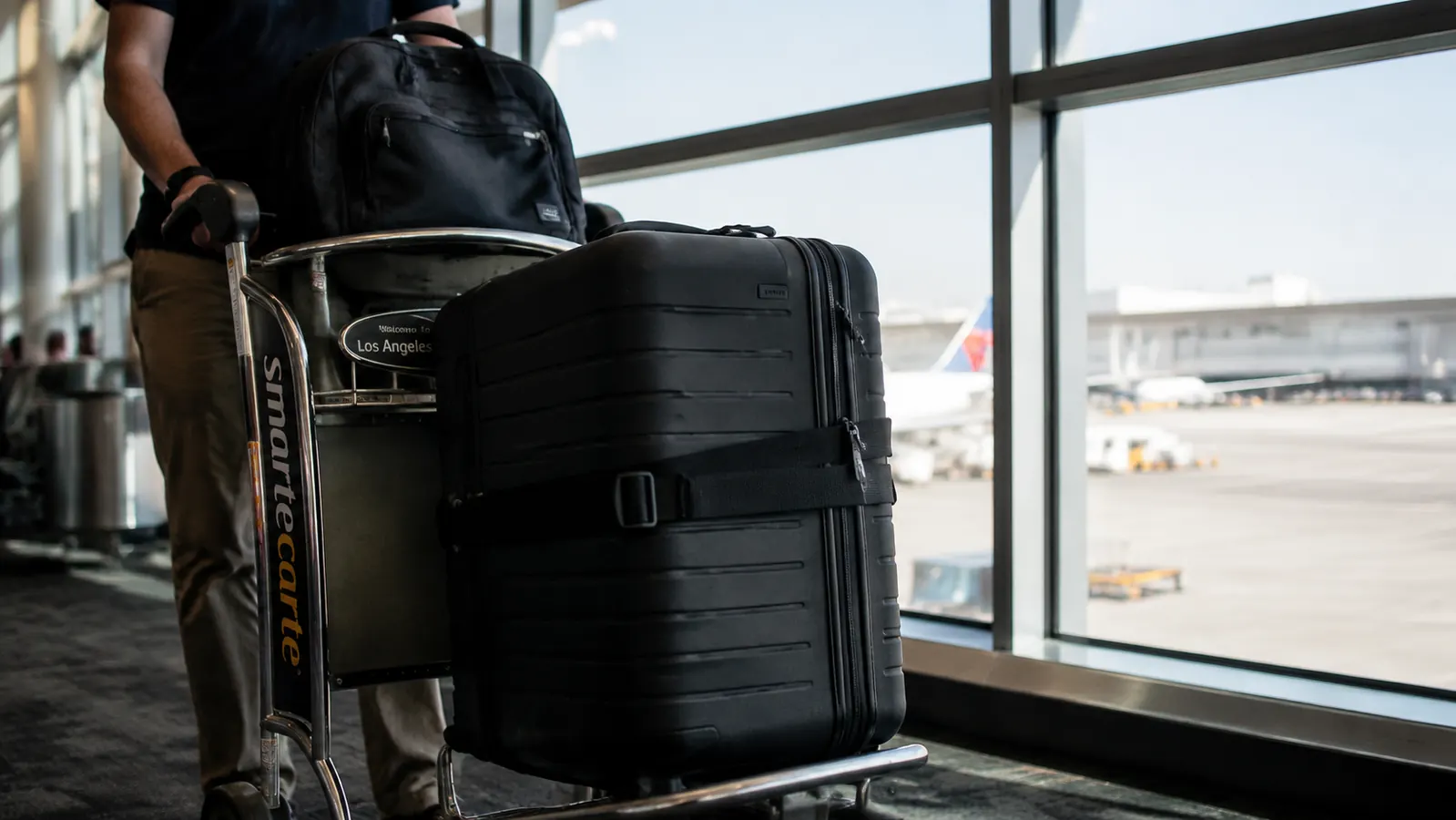
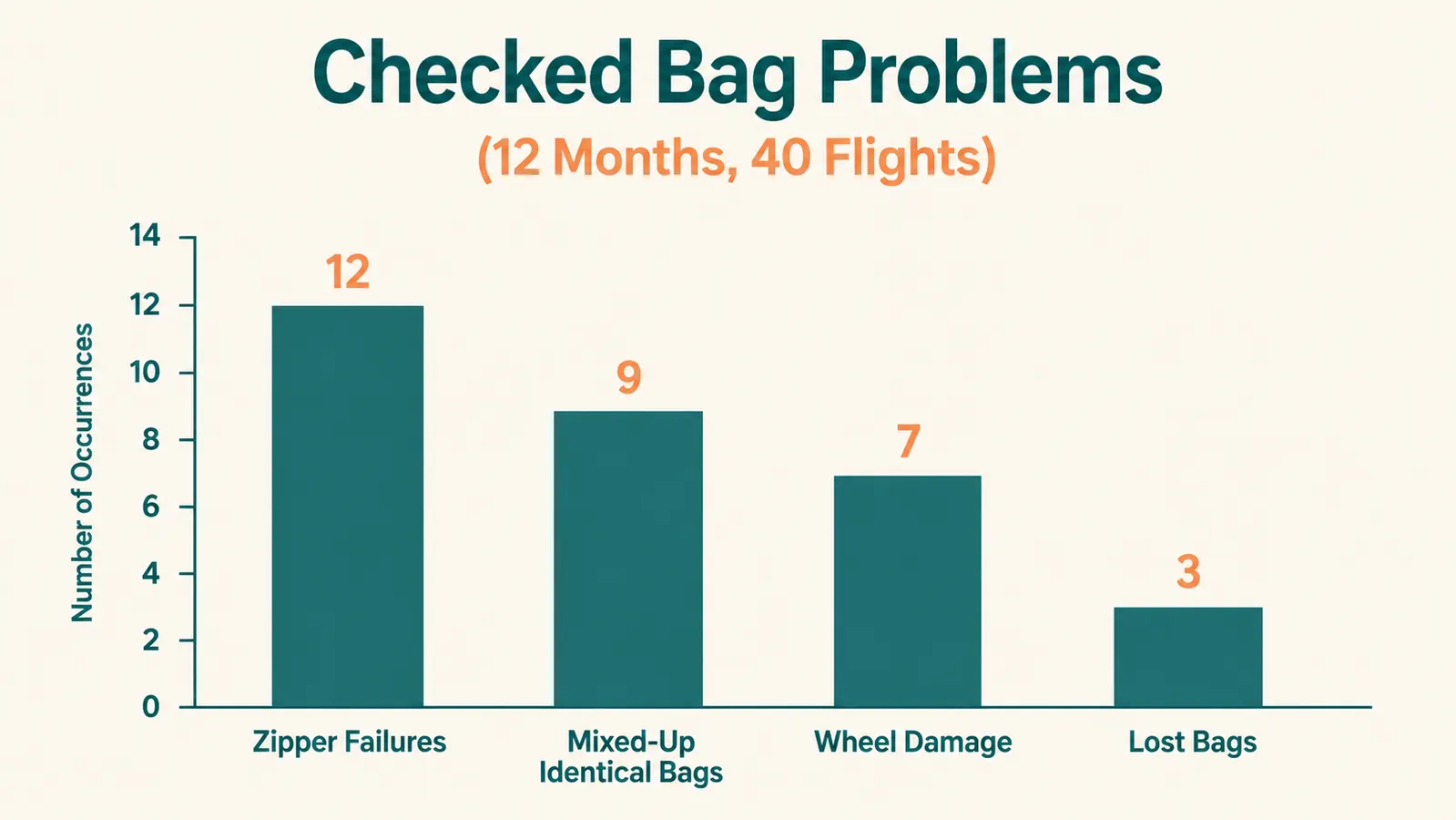
I ignored luggage straps for years. They seemed like something my dad packed, right next to the travel iron nobody uses. Then a zipper blew out on my hard-shell suitcase during a layover in Charlotte and half my clothes ended up loose in the belly of a regional jet, and I bought a 4-pack of TSA-approved straps the next week. I've checked bags on close to 40 flights since then with a strap on every single one, and it's turned into one of those five-dollar habits that quietly prevents five-hundred-dollar problems.
It's not a lock. It's not a tracker. It's just a strip of nylon with a buckle, and that's exactly why it works. It does one job, and it does it every time, without batteries or an app or anything that can fail electronically. Here are 10 reasons it's earned a permanent spot on every bag I check, whether I'm gone for a weekend or three weeks.
The five-dollar habit that's prevented every zipper disaster since
A 4-pack of TSA-approved straps costs less than a checked-bag fee. Check today's price before your next flight.
Amazon Check Today's Price on Amazon →Zippers fail more than airlines will admit
That Charlotte layover wasn't a fluke. I've since read enough baggage handler forums to know overstuffed zippers are one of the top reasons checked bags arrive open or missing pieces. Airlines don't publish a number for this because it's not technically their fault, but talk to anyone who works a ramp crew and they'll tell you it happens weekly. A strap doesn't stop a zipper from splitting under pressure, but it does hold the whole bag closed even after the zipper gives up, which is the difference between a scare and losing half your clothes on a tarmac somewhere.
Identical black suitcases are everywhere
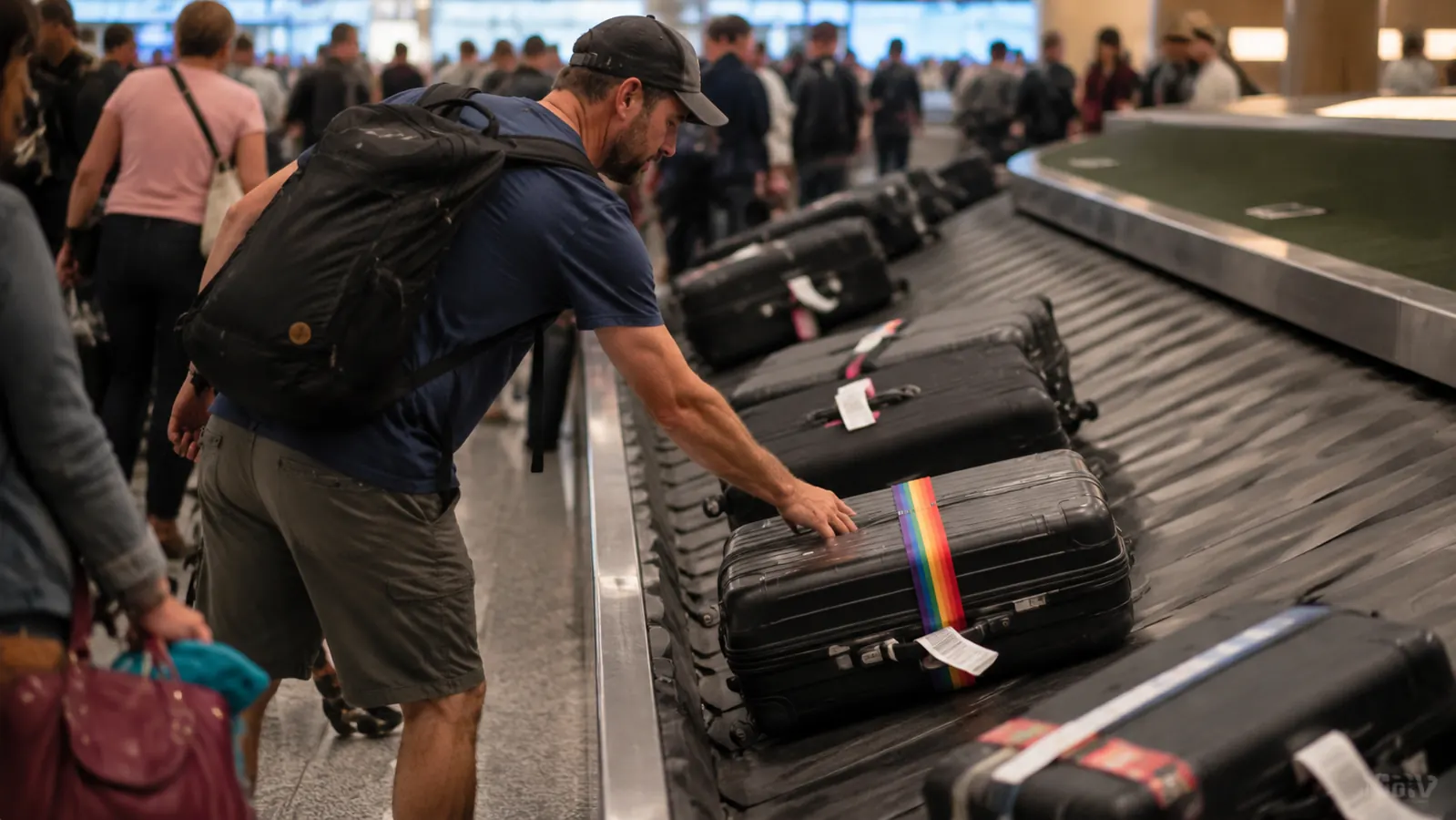
Stand at any carousel for five minutes and count the plain black hard-shells. I stopped counting after 15 on a recent trip through Denver. A bright strap in a color nobody else is using turns my bag into the one I can spot from thirty feet away instead of squinting at every black bag that rolls past hoping it's mine, or worse, grabbing the wrong one and not noticing until you're in the cab.
Rough handling is the rule, not the exception
I've watched baggage carts get loaded at a speed that looked more like a game than a job, bags tossed, stacked, and dropped from height without much ceremony. Nobody down there is being careless on purpose, they're just moving fast on a schedule that doesn't allow for gentle. A strap adds a second layer of tension around the whole suitcase, so when it gets dropped or squeezed under something heavier, the zipper isn't the only thing holding your belongings inside.
Overpacked bags need the extra compression
I am, admittedly, a chronic overpacker on longer trips. Past a certain point the zipper is straining just to close, and every bump in transit adds more stress to that seam. Cinching a strap around an overstuffed bag takes some of that pressure off the zipper track itself, which matters most on the trips where I've packed the least sensibly, which is most of them if I'm honest.
TSA-approved means it survives inspection intact
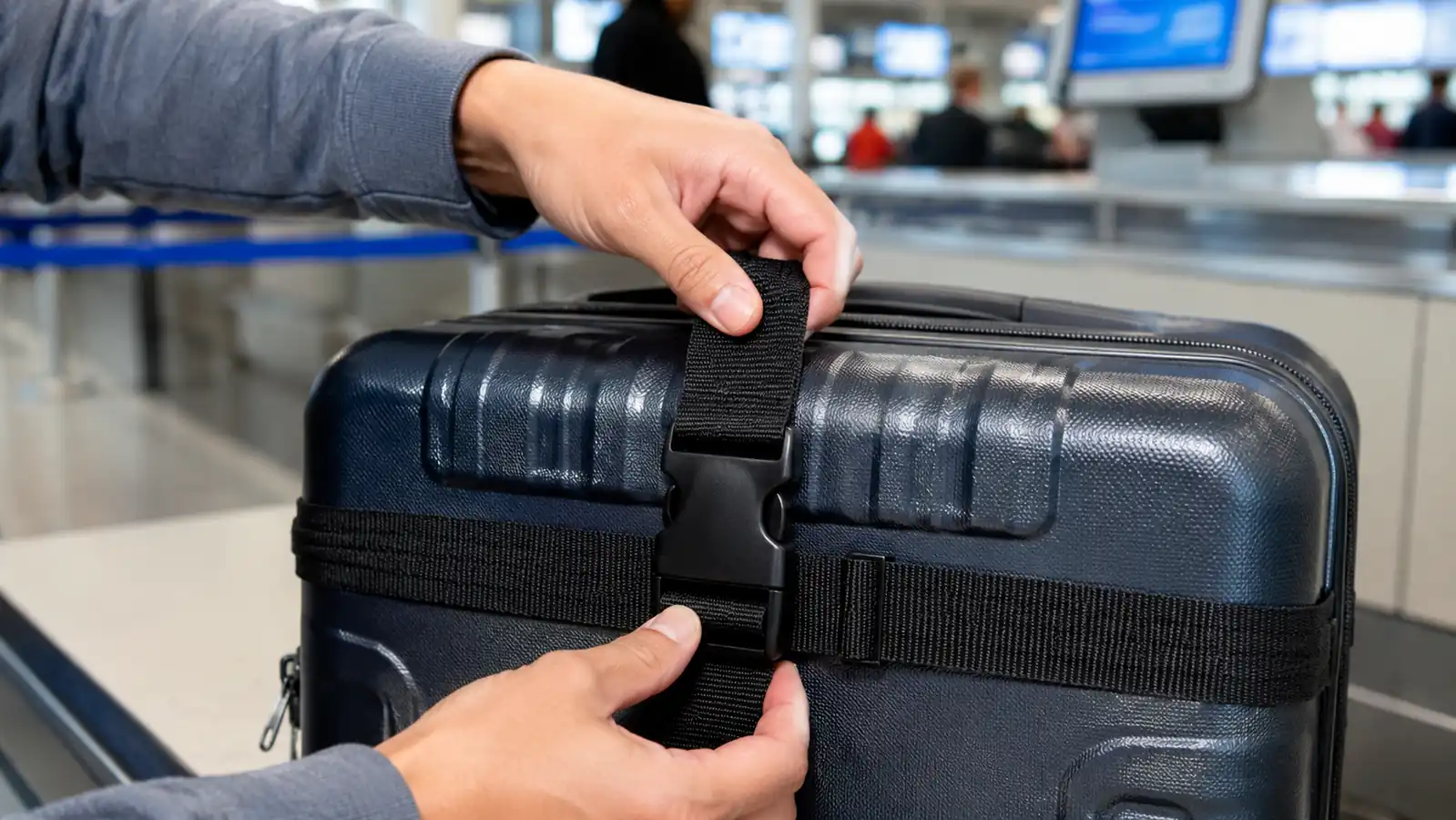
Straps that aren't TSA-approved sometimes get cut off during a random bag search because there's no other way in for an agent working through a checklist. Mine haven't been cut once in 40 flights, because the design lets TSA open, inspect, and re-secure the bag using the same buckle mechanism. That's the difference between a strap that lasts a year and one you're replacing after your first flagged bag, and I've been flagged more than once.
It's a visual deterrent, even if a small one
I'm not going to claim a nylon strap stops a determined thief, it won't. But it does make a bag look less like an easy, quick grab-and-go target compared to one with an unsecured zipper sitting wide open at the seams. Small deterrents add up, and this one costs about as much as an airport coffee and takes ten seconds to buckle on before you hand your bag over.
It holds a cracked case together long enough to get home
A friend of mine had a wheel assembly crack on a connecting flight, and the strap around her bag was the only thing keeping the shell from splitting fully open on the last leg. It wasn't a permanent fix, and the case still needed replacing once she got home, but it got her suitcase through customs intact instead of taped together with whatever the gate agent could scrounge up.
Color-coding works for families and group trips
Traveling with my sister and her kids, we gave each suitcase a different colored strap instead of trying to remember whose bag had the scuffed corner or the sticker on the side. It sounds almost too simple to matter, but it cut our carousel confusion down to almost nothing on a trip where we checked six bags between four people, and nobody grabbed the wrong one by mistake even once.
It's cheap enough that losing one doesn't sting
A 4-pack runs less than most airlines charge for a single checked bag fee. If a strap frays after a couple years of hard use, or one gets left behind at a hotel because I unbuckled it and forgot to grab it off the luggage rack, it's not a real loss the way a broken hard-shell case or a lost tracker would be. Low cost per use is a big part of why I never hesitate to grab one before a trip.
It closes the gap between what a lock protects and what it doesn't
A lock keeps zippers from being opened deliberately by someone with the time and intent to try. It does nothing for a zipper that fails structurally, a bag that gets crushed under other luggage, or a suitcase that looks identical to fifty others on a carousel. A strap covers exactly the gap a lock leaves open, which is why I run both on every checked bag now instead of treating them as competing options that do the same job.
What I'd Skip
I wouldn't rely on a strap alone if security is your main concern, pair it with a TSA lock for that instead of expecting one product to do both jobs. And on some ultra-lightweight soft-sided bags, a strap cinched too tight can actually distort the shape more than it protects it, so I only use mine on hard-shell and structured soft-sided cases now. If you're a carry-on-only traveler who never checks a bag, you probably don't need one at all. But for anyone checking bags regularly, the downside here is close to zero and the upside has already paid for itself more than once.
It doesn't stop a zipper from failing. It makes sure your belongings stay inside the bag when it does.
Don't let a burst zipper scatter your clothes across a tarmac
This TSA-approved 4-pack has held every checked bag together for 40 flights straight. Check today's price and toss one in before your next trip.
Amazon Check Today's Price on Amazon →