
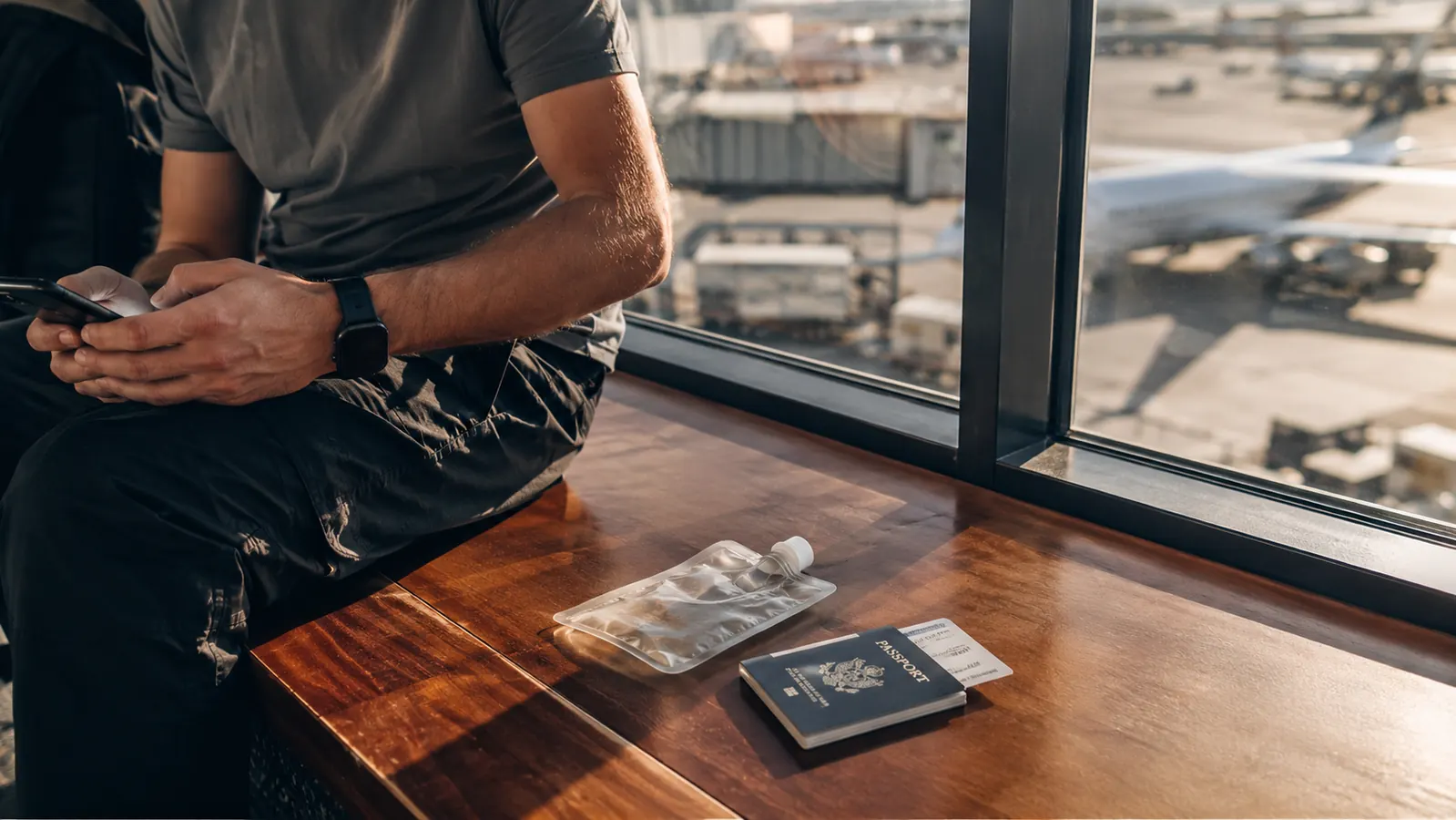
I bought this 2-pack of Survivor Filter collapsible bottles in January, mostly because I was tired of either paying six bucks for water past security or lugging around a hard Nalgene that ate half my daypack. Six months and a dozen trips later, including a three-leg flight to Portugal and four separate day hikes in the Sierras, I've got a real answer on whether these things hold up or just look good in the Amazon photos.
Short version: they're still in my bag right now, and I've replaced exactly zero of them. That alone puts them ahead of the last two collapsible bottles I tried, which both split at the fold line inside of two months of casual use.
For context, I'm not new to collapsible bottles. I've owned three before this one, a budget no-name off Amazon that split at the seam in six weeks, a slightly nicer one that developed a slow leak at the cap threads by month two, and one that just went cloudy and started smelling like a gym bag no matter how I cleaned it. That track record is exactly why I went in skeptical here, and why I kept using both bottles in this 2-pack far past the point where I'd normally have written a review.
The Quick Verdict
A genuinely useful, packable bottle that survives real travel abuse, with a couple of small tradeoffs around taste and cap fiddliness.
Amazon Check Today's Price →Tired of paying airport prices for water you could've packed for free?
Fold it flat, clear security empty, fill it at any fountain past the gate. Check today's price on Amazon before your next trip.
Amazon Check Today's Price on Amazon →How I've Used It
My test wasn't gentle. I run one bottle in my daypack for daily carry and keep the second as backup in my checked bag, which means one of them has been folded, unfolded, frozen in a hotel mini-fridge, and stuffed into a side pocket next to a phone charger and a multitool for half a year straight.
The full trip list since January: two work trips to Denver, a week in Portugal with my wife, a long weekend in Chicago for a wedding, three separate day-hike outings in the Sierras near Bishop, and a family road trip down to Sedona in July. That's roughly a dozen distinct outings across planes, cars, and trails, which is about as real-world a test as I can put a single piece of gear through without turning it into a full-time job.
On flights, the routine is the same every time. Empty it completely before the TSA line, fold it down to about the size of a hockey puck, drop it in the tray with my laptop, and refill at the water fountain past security. I've done this at Denver, Newark, Lisbon, and O'Hare without a single second look from an agent. It's just an empty plastic container by the time they see it, and it takes up almost no room in the bin next to my laptop and shoes.
On the trail, it's a different job. I clip it to the outside strap of my daypack with a small carabiner and let it hang instead of packing it inside, since a full 20-ounce collapsible bottle sags and shifts more than a rigid one when it's stuffed in a side pouch. That's worked fine on four separate day hikes between 5 and 9 miles in the Sierras, no leaks, no pop-off caps, and no weird pressure bulges even after a warm afternoon in direct sun.
At home between trips, it lives in a kitchen drawer, folded flat, ready to grab. That part matters more than it sounds like it should. My old hard bottle sat on the counter taking up space because there was nowhere sensible to stash it, which meant I'd forget to pack it half the time. This one disappears into a drawer the size of a phone case, so it's actually there when I'm throwing a bag together at 6am.
The Build: What's Actually Holding Up
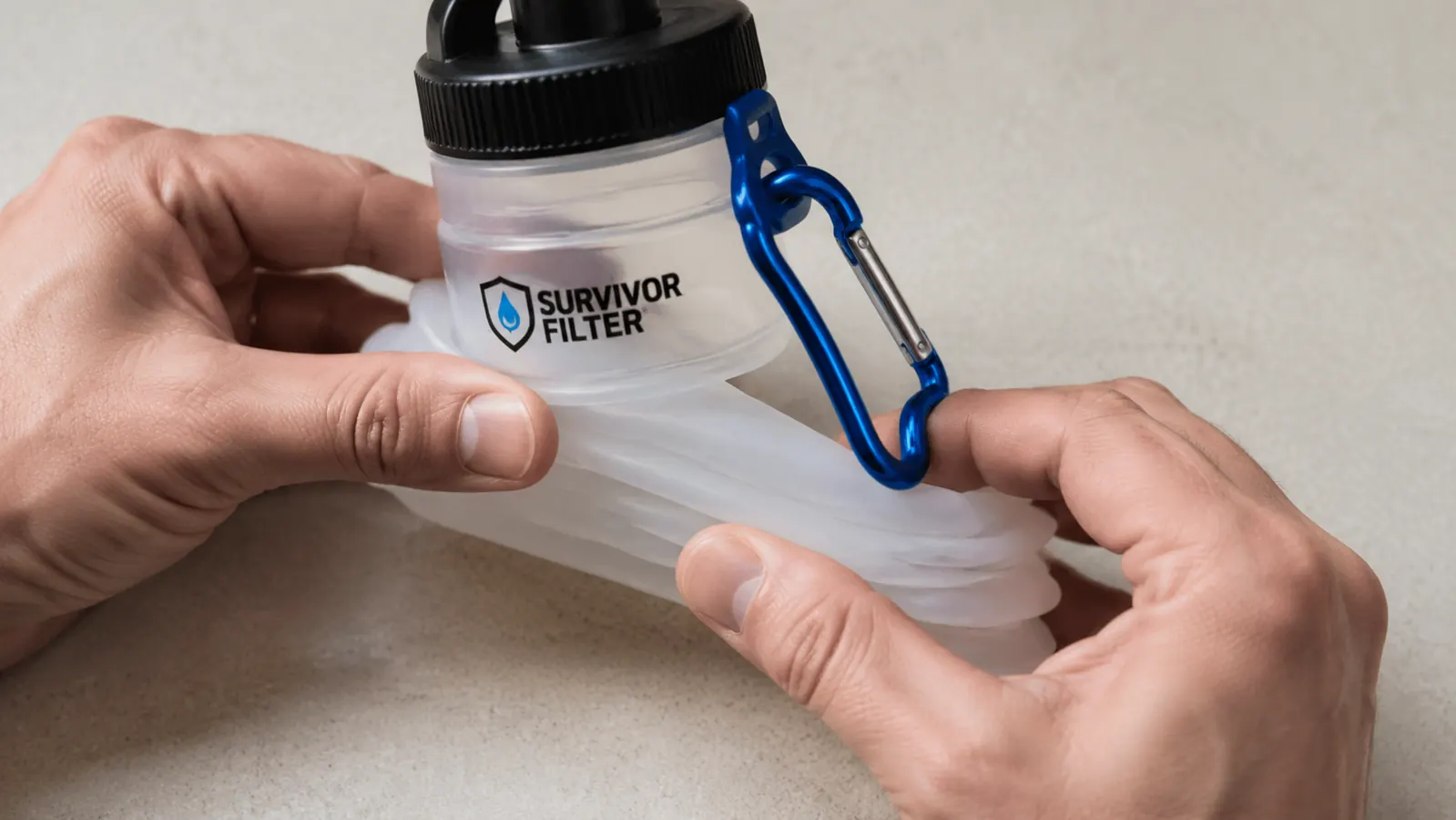
The body is a clear, food-grade silicone that folds accordion-style, similar to the bellows on an old camera. After six months of daily folding, I checked the fold creases under a bright light for stress cracking, the failure point on every cheap collapsible bottle I've owned before this one. There's some visible whitening along two of the folds, but no cracks, no weeping, no loss of structural integrity when full.
The threaded cap is where I've had my only real complaint. It's a standard screw-top with a small carry loop molded into the lid, and the threads are shallow enough that I've had it back off on its own twice, both times while the bottle was jostling loose in an outside pocket rather than clipped down. Neither time did I lose more than an ounce or two of water, but it's the one design detail I'd flag before you buy. I've gotten in the habit of giving the cap one extra quarter-turn past where it feels snug, and that's stopped the problem entirely.
The base is a rigid plastic ring that gives the Survivor Filter enough structure to stand upright when it's, say, a third full, which matters more than it sounds like it should. My previous collapsible bottle had no rigid base and would just tip over on any surface that wasn't perfectly flat, which meant it lived flat on its side in a cup holder more often than upright on a nightstand. This one stands on its own on a hotel desk, a plane tray table, and even the slightly uneven picnic table at a trailhead in Bishop, which sounds trivial until you've knocked over a half-full bottle onto your only dry pair of socks.
One thing I didn't expect: the clear silicone has stayed genuinely clear, not the cloudy, slightly yellowed look a lot of budget silicone gets after a few months of sun exposure. I keep one bottle clipped to the outside of my pack, which means direct UV exposure on hikes, and there's no noticeable yellowing at the six-month mark.
Taste and Cleaning, the Part Nobody Talks About
Here's the honest tradeoff with silicone bottles versus hard-sided ones: the water picks up a faint plastic taste for the first several fills, especially with hot liquids. I made the mistake of putting coffee in mine on a red-eye out of Denver and regretted it for the rest of the flight. Cold water is fine after the first two or three washes, but I wouldn't recommend this bottle for anything but water and maybe an electrolyte packet.
Cleaning is where the accordion folds become a genuine hassle. A standard bottle brush can't reach into the ridges, so I've been hand-washing with hot soapy water and shaking it out, then air-drying it inverted over a wine glass on the counter, which is the only trick that's actually kept mold from forming in the folds. Skip that step for even a week of daily use and you will see faint discoloration start to creep into the creases.
Once a month I run a diluted vinegar rinse through both bottles, swishing it around and letting it sit for ten minutes before rinsing clean. That single habit has kept the plastic taste from creeping back in over time, and it's the closest thing to a maintenance routine the Survivor Filter actually needs. It's a small extra step, but skipping it is the fastest way to end up with a bottle that tastes like a gas station the second time you use it.
Performance Over Time
Month one, this thing felt like a novelty, something I packed because it was light, not because I trusted it. By month three, after the Portugal trip where it got folded and unfolded probably 15 times in a single week of city walking, I stopped thinking about it entirely, which is honestly the best sign a piece of travel gear can give you.
The one change I've noticed is that the silicone has softened slightly with heat exposure, most likely from sitting in a hot car trunk in July for a few hours during a road trip to Sedona. It still holds shape and doesn't leak, but it folds a touch looser now than it did in January, and it takes an extra few seconds to coil down tight. It's a cosmetic and convenience issue, not a structural one, but I noticed it enough to mention it here.
By month five, the second bottle, the one I keep as a spare in my checked bag, had barely been used at all, so I did a side-by-side comparison. Folded next to each other, the daily-use bottle is noticeably softer and slightly more discolored at the folds, while the barely-used spare looks close to new. That gap tells me the wear is coming from actual use and heat cycling, not from age sitting in a bag, which is the outcome you want from a product like this.
I also weighed both bottles empty at the six-month mark against their listed spec, mostly out of curiosity. Neither had gained or lost measurable weight, which rules out any water absorption into the silicone itself, something I'd wondered about after a few humid days in Lisbon where the bottle sat half-full in a warm bag for hours at a time.
Who I Considered Instead
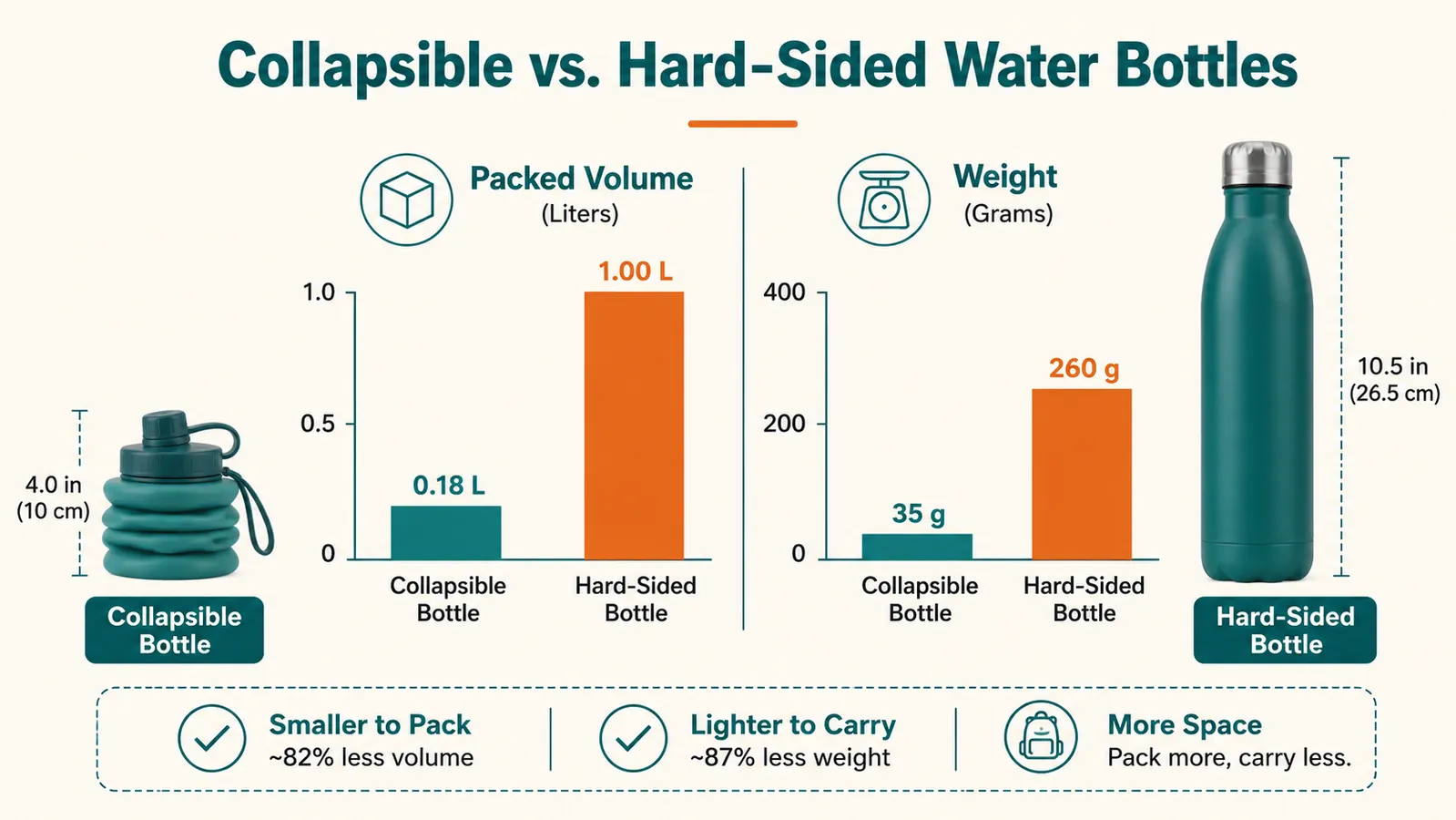
Before landing on this Survivor Filter 2-pack, I looked hard at a Nalgene-style hard bottle and a name-brand insulated collapsible I'd seen recommended in a gear forum. The hard bottle won on taste and cleaning every time, but it's dead weight in a daypack when it's not in use, no way around that. The pricier insulated collapsible kept drinks cold longer, but at nearly triple the price for a single bottle, it didn't make sense for something I mostly use for plain tap and fountain water.
What tipped it toward this one was the 2-pack format. I keep one in daily rotation and one as a spare in my checked bag, so if a cap fails or a fold finally splits mid-trip, I've got a backup without scrambling to find a store in a country where I don't speak the language well enough to explain what I'm looking for.
There's also a simpler reason this made the cut: at under 17 dollars for the pair, replacing one if it eventually fails isn't a real financial decision, it's a five-minute reorder. That math changes how I use gear. I'm less careful with something replaceable, which ironically is probably part of why it's held up, since I'm not babying it or treating it like a fragile piece of equipment.
What I Liked
- Folds flat enough to clear security empty and disappear into a daypack pocket
- Rigid base keeps it standing upright when partially full
- No cracking after 6 months of daily folding, just minor crease whitening
- Comes as a 2-pack, so you've got a built-in backup
- BPA-free and clear, easy to see how much water is left
- Stays clear with no yellowing even with regular UV exposure on the trail
Where It Falls Short
- Cap threads are shallow and can loosen if the bottle jostles loose in a bag
- Faint plastic taste for the first several fills, worse with hot liquids
- Accordion folds trap grime and need hand-washing plus full air-drying, a bottle brush can't reach
- Silicone softens slightly with prolonged heat exposure, folds a bit looser over time
By month three I stopped thinking about it entirely, which is the best sign a piece of travel gear can give you.
Who This Is For
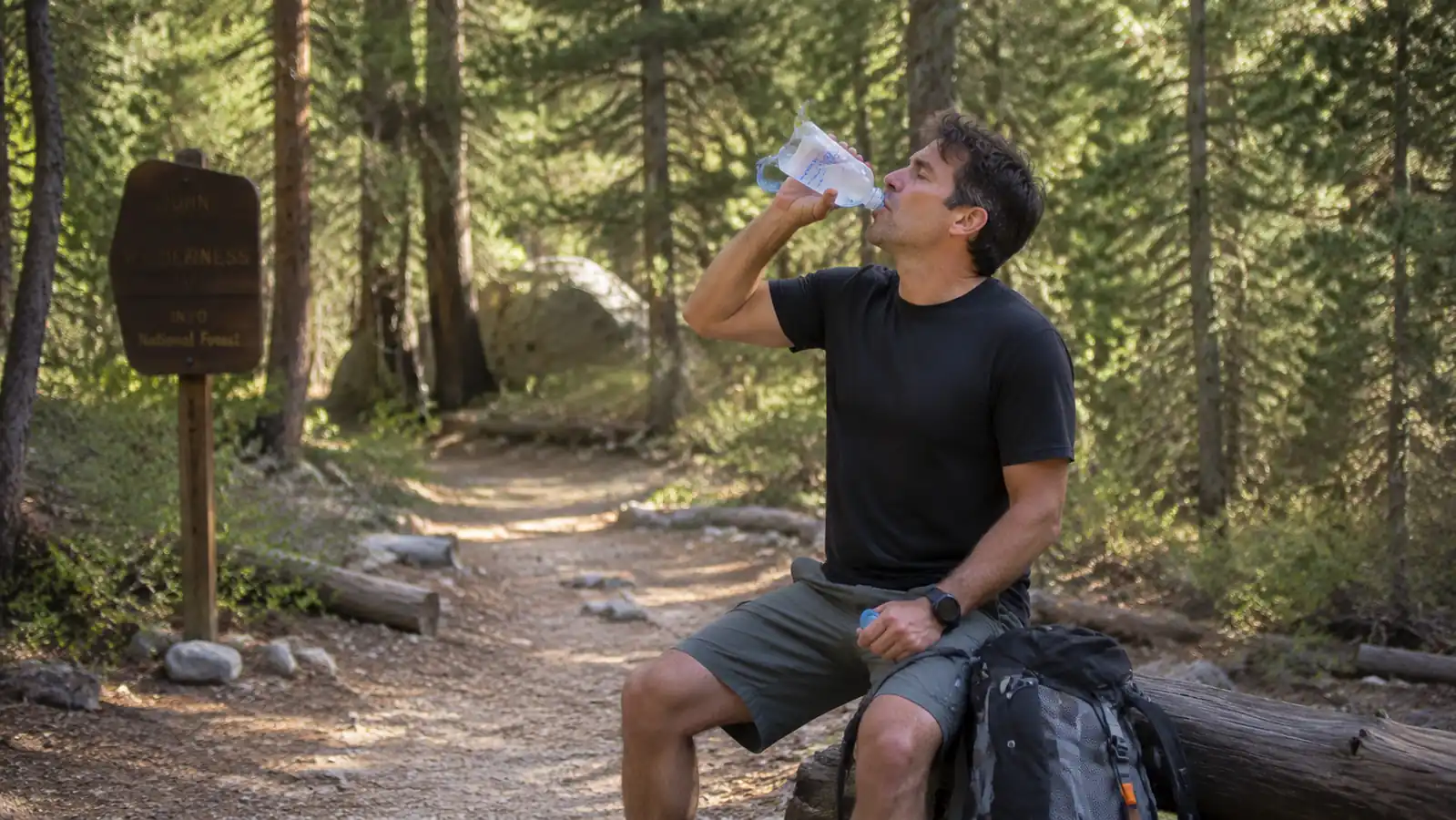
If you fly with a carry-on only and hate either buying overpriced water past security or hauling a heavy hard bottle through the terminal, this solves that specific problem well. It's also a solid pick for day hikers who want something they can clip to a pack strap without adding real weight, and for anyone who packs light and resents giving up bag space to gear that only earns its keep half the time. If you're the type who forgets to pack a water bottle because the hard one never fits anywhere sensible, this one solves that too, since it lives flat in a drawer or side pocket until you actually need it.
Who Should Skip It
If you're particular about water tasting neutral from the very first sip, or you want to use the same bottle for coffee, tea, and water interchangeably, get a hard-sided insulated bottle instead. Same goes if you're doing multi-day backcountry trips where a bottle brush and thorough cleaning aren't realistic, since the folds need real attention to stay grime-free. And if you tend to toss gear in a bag and forget about maintenance entirely, the monthly vinegar rinse this bottle wants might be one more chore than you're willing to take on.
Six months, a dozen trips, still no replacements needed
That's a longer track record than most collapsible bottles get before something splits. See today's price and grab the 2-pack before your next flight.
Amazon Check Today's Price on Amazon →