
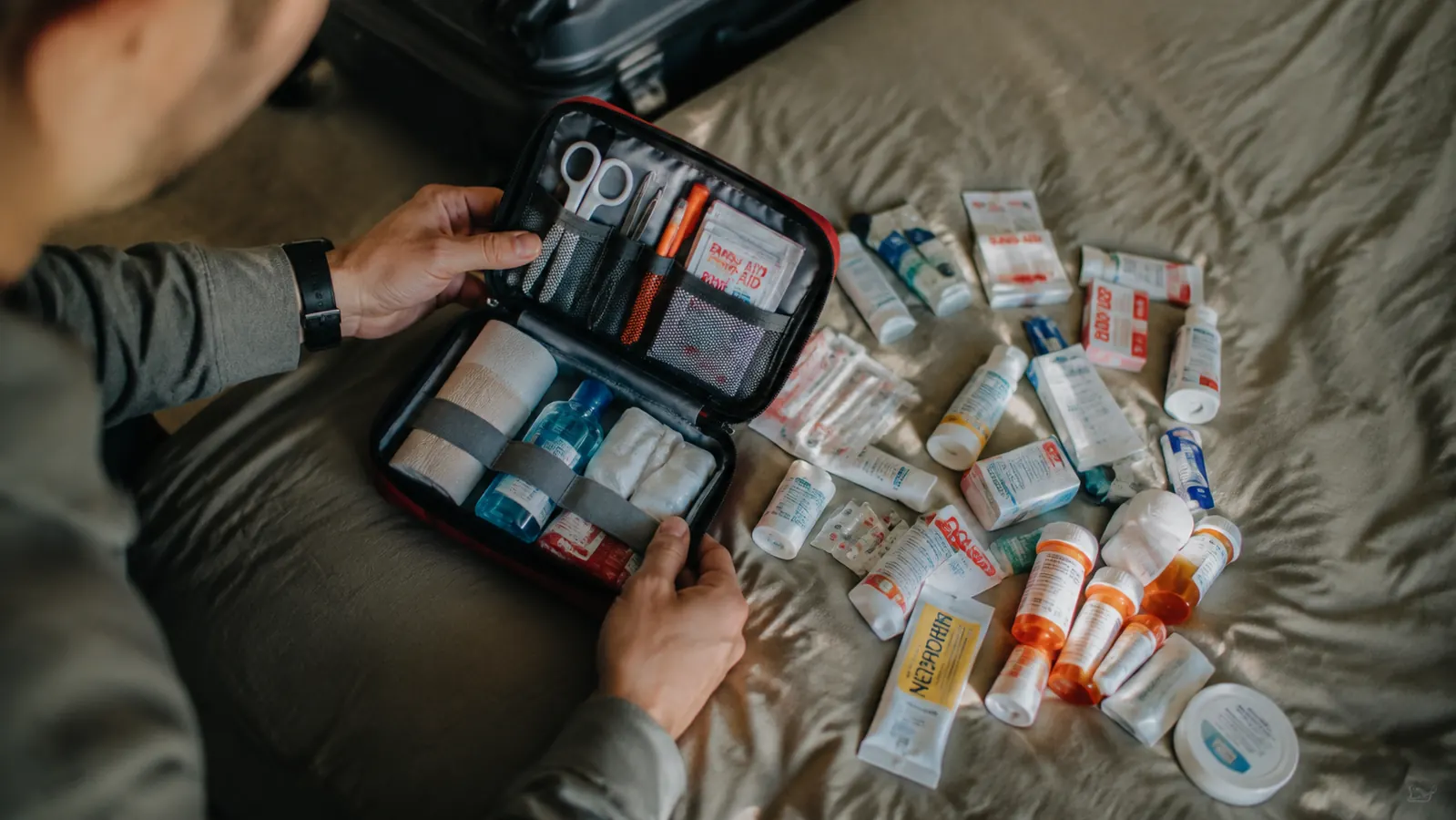
Short answer: for most travelers, a pre-made kit like the First Aid Only 298 Piece Emergency Kit wins. Not because a DIY kit can't work, I've built plenty of my own over the years, but because the math on cost, weight, and the stuff you forget rarely favors the DIY route once you actually sit down and compare them side by side, item for item.
I've traveled both ways. For about four years I just tossed a handful of bandages and some ibuprofen in a sandwich bag and called it a first aid kit. Then a bad blister situation in Lisbon and a kitchen-knife cut in an Airbnb in Oaxaca (don't ask) convinced me to actually test a real pre-built kit against my old DIY setup on back-to-back trips. This article is the result of that comparison, not a guess.
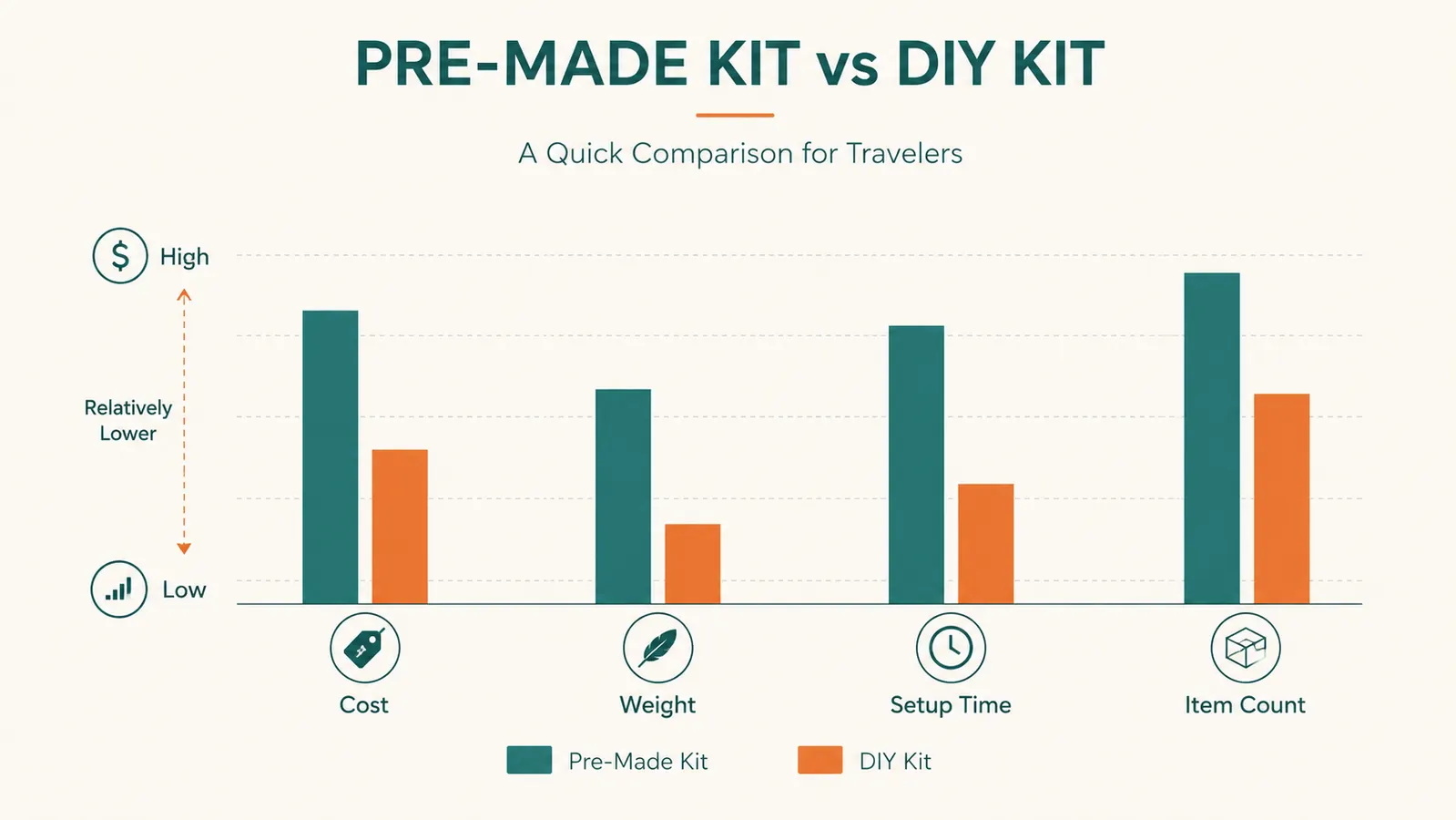
| Pre-Made First Aid Kit | DIY Travel Kit | |
|---|---|---|
| Product | First Aid Only 298 Piece Kit | DIY Pharmacy-Built Kit |
| Upfront Cost | Check today's price on Amazon | Comparable coverage costs more |
| Item Count | 298 individually packaged items | Usually 30 to 60 items, mismatched sizes |
| Packed Weight | About 1 lb in a soft zip pouch | 1.5 to 2 lbs once you add boxes and bottles |
| Setup Time | Zero, arrives ready to pack | 45 to 90 minutes shopping and repacking |
| Organization | Pre-sorted compartments inside the pouch | Whatever ziplock or pouch you improvise |
| Coverage Gaps | Minor, mostly personal meds you add yourself | Common, easy to forget burn cream, tweezers, or enough gauze |
| TSA Carry-On Friendly | Yes, compact zip pouch fits any bag | Depends on how it's packed, often bulkier |
Where the Pre-Made Kit Wins
The biggest win is coverage without the guesswork. The First Aid Only kit has 298 pieces, and that number sounds inflated until you actually unzip it. You get adhesive bandages in four different sizes, gauze pads, medical tape, antiseptic wipes, an instant cold pack, burn cream packets, antibiotic ointment, tweezers, scissors, and a handful of over-the-counter meds like ibuprofen and antacids. When I built my own kit before, I forgot the cold pack every single time. It's not something you think to buy at the pharmacy unless you're specifically shopping for a first aid kit, and it's the thing I've actually reached for most, twice for a swollen ankle and once for a wasp sting in Croatia.
The second win is packed size. The whole thing zips into a soft pouch about the size of a paperback book. It slides into the outer pocket of my carry-on and I genuinely forget it's there until I need it. My old DIY kit was always bulkier because I was working with retail packaging, a full box of bandages instead of ten individually wrapped ones, a full bottle of ointment instead of a single-use packet. Pre-made kits are built by people whose whole job is minimizing bulk while maximizing coverage, and it shows in how tightly everything nests together inside the pouch.
The third win, and the one I didn't expect to matter this much, is consistency across trips. Every time I open this kit before a flight, it's exactly as I left it. Nothing has migrated to a different drawer, nothing has been borrowed for a random cut at home and never replaced. That sounds like a small thing until you're the person standing in an airport bathroom realizing your DIY kit is missing half its contents because your kid used the bandages for a scraped knee three weeks ago and nobody restocked.
Stop guessing what belongs in a travel first aid kit
The First Aid Only 298 Piece Kit already solved the guesswork for me. It's the one I've packed on every trip for the last year, cold pack and all.
Amazon Check Today's Price on Amazon →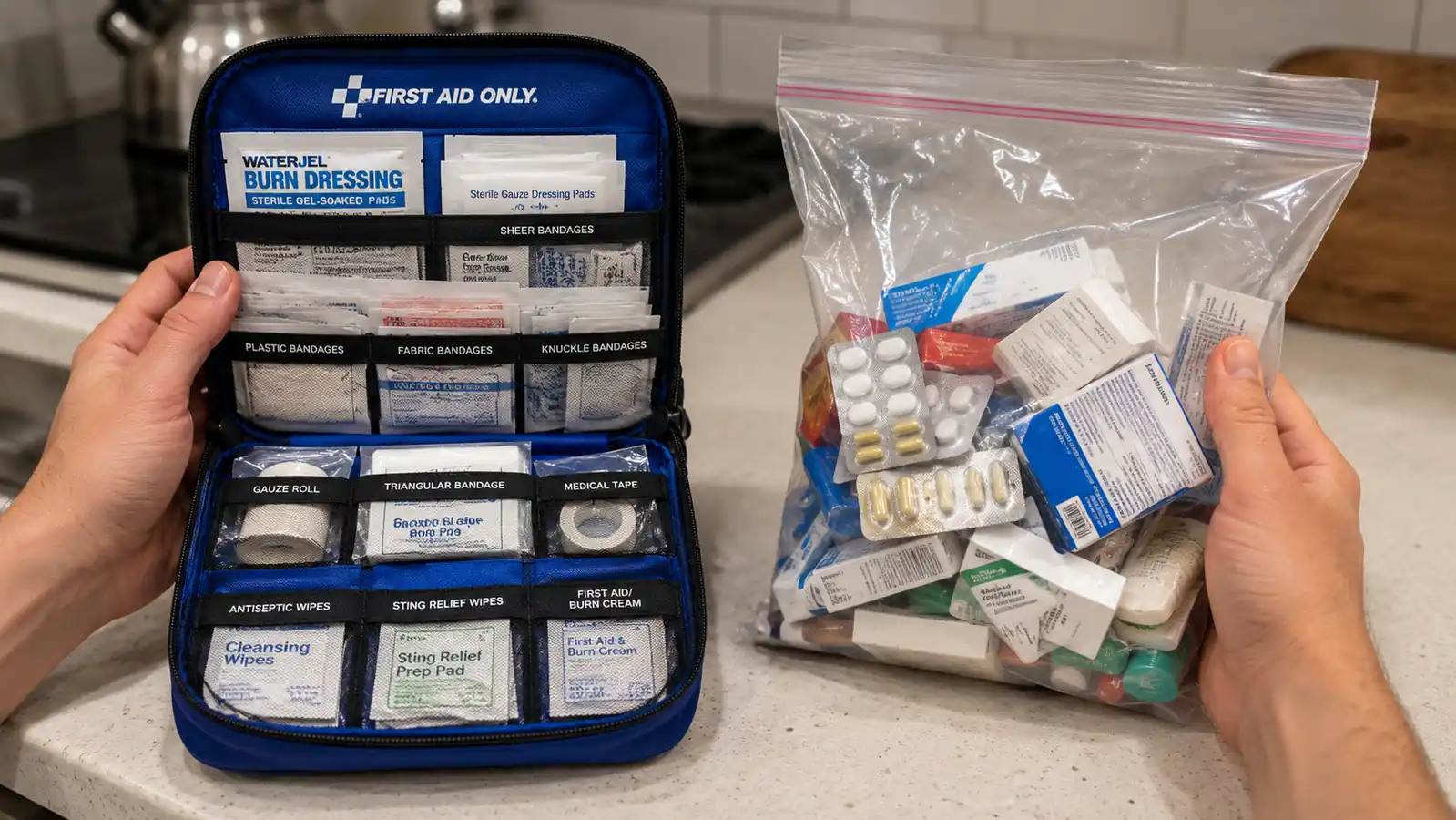
Where the DIY Kit Wins
I'll give the DIY approach real credit in two areas. First, customization. If you have a specific condition, say you need a certain antihistamine, an EpiPen, or a particular wound care product for a chronic issue, a pre-made kit is never going to have exactly what you need. You're building a personal med kit on top of it regardless, so some travelers just skip the pre-made kit entirely and build from scratch around their specific needs, which makes sense if your needs are unusual enough that no generic kit covers them anyway.
Second, if you already own most of the components. If you've got a drawer full of half-used bandage boxes, an old bottle of antiseptic, and a pair of tweezers from a manicure set, assembling those into a small pouch costs you basically nothing except time. The math only favors DIY when you're starting from stuff you already have lying around the house. The moment you're buying everything fresh to match the coverage of a real kit, the cost adds up fast, usually more than the pre-made kit runs today, and you still end up with worse organization.
The DIY kit only wins if you already own half the supplies. Buy it all fresh and you'll spend more for less coverage than the box that shows up ready to go.
Where the DIY Kit Falls Short in Practice
I want to be fair to the DIY side because I used it for years before switching. The honest failure mode isn't that it doesn't work, it's that it degrades over time in ways a sealed kit doesn't. My old ziplock bag first aid kit had bandages that lost their stick after a year of humidity exposure, an ointment tube that dried out, and tweezers that migrated to a junk drawer between trips because they weren't tied to a dedicated kit. A pre-made kit stays sealed and organized because it's designed as one unit, not a loose collection you have to remember to maintain and restock after every use.
The other gap is completeness under pressure. When you're actually dealing with a cut or a burn mid-trip, you don't want to be digging through a ziplock bag hoping you packed the right size gauze. The pre-sorted compartments in a real kit mean you grab the pouch, open it, and everything is laid out logically. That matters more than it sounds like when you're stressed and your kid is crying because they scraped a knee on cobblestones in a country where you don't speak the language well enough to ask a pharmacist for help.
There's also a hidden cost to DIY that people don't factor in until they've done it once: the shopping trip itself. Standing in a pharmacy aisle trying to remember whether you need gauze pads or gauze rolls, whether you already own scissors, whether the antiseptic you're grabbing is the same one you used last time, eats up 45 minutes to an hour that most people don't budget for when they're already juggling packing lists two days before a flight.
Who Should Buy the Pre-Made Kit
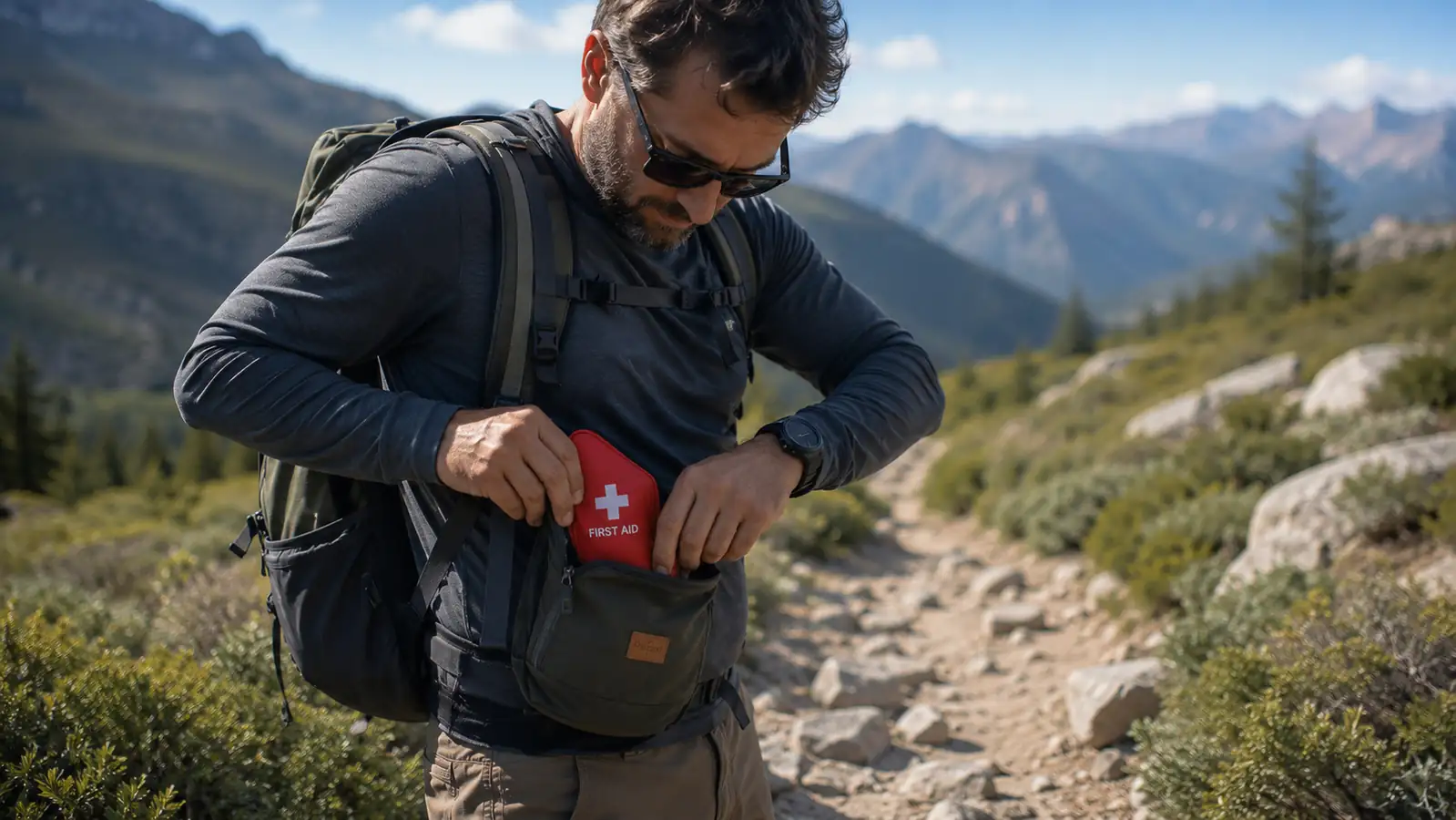
If you travel more than twice a year, have kids, do any hiking or outdoor activity on trips, or just don't want to think about it, buy the pre-made kit. At $18.37, it's cheaper than assembling the same coverage yourself, and it removes an entire category of pre-trip decision fatigue. You zip it into your bag once and it's handled for the next two or three years of travel, restocking only the couple of items you actually use up.
Pack once, stop thinking about it for years
This is the exact kit I've carried through eight trips without a single gap in coverage. Cheaper than building your own, and it's already sorted for you.
Amazon Check Today's Price on Amazon →Who Should Build Their Own
If you have a specific medical need that no generic kit will cover anyway, or you're already sitting on a drawer of half-used first aid supplies and just need a pouch to organize them, DIY makes sense. Just be honest with yourself about whether you're actually going to sit down and do the sorting, or whether it becomes another item on the packing list you skip because it feels like a hassle. That's exactly what happened to me for four years before I finally bought a real kit, and it's the same pattern I hear from other travelers who tell me they'll get around to building one someday.