
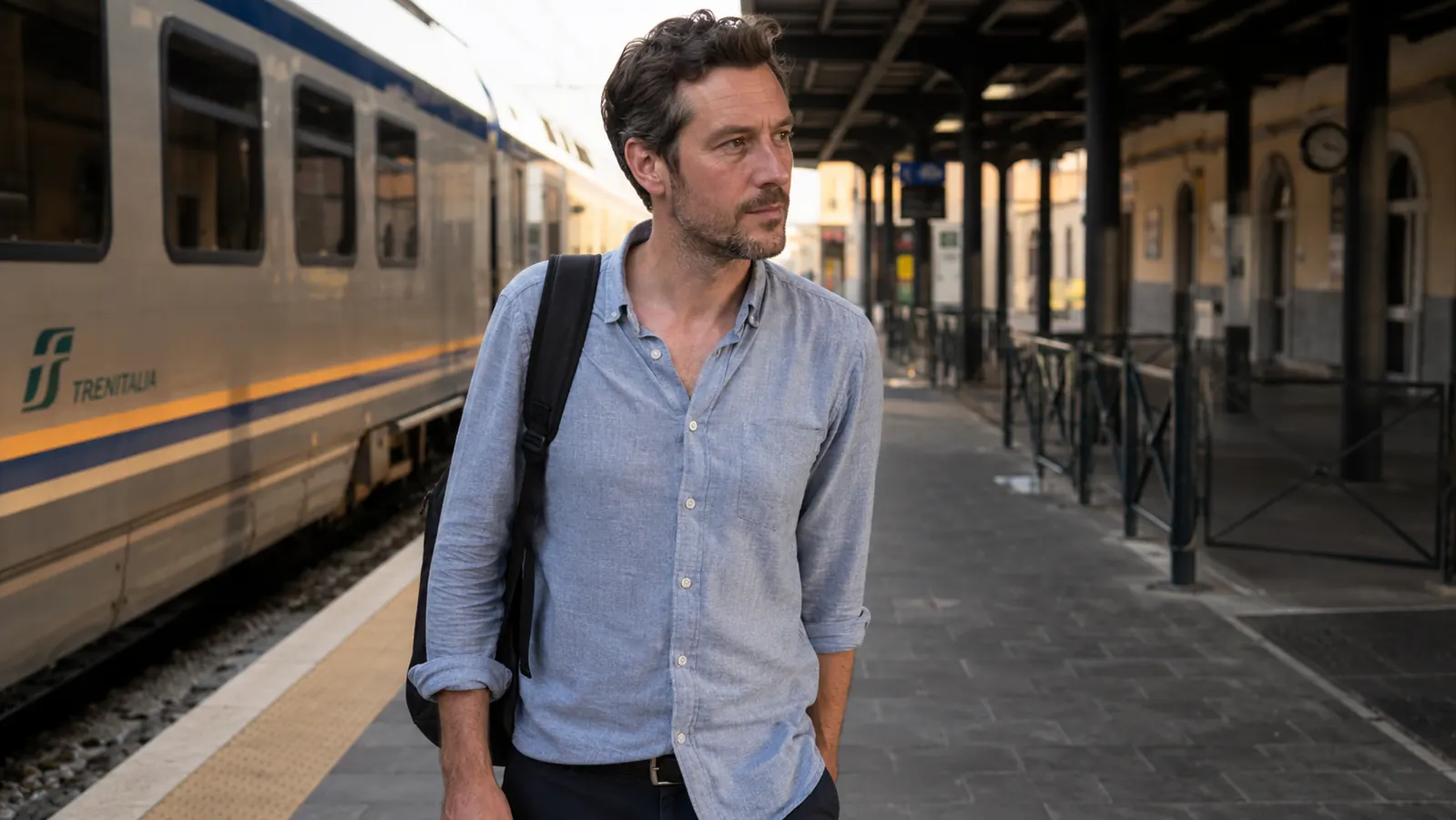
I bought my Alpha Keeper money belt in a hotel room in Lisbon at 11pm, after reading three separate warnings about pickpockets on the train to Sintra. Six months and eight countries later (Portugal, Spain, Morocco, Italy, Croatia, Turkey, Thailand, and Vietnam) it's still the first thing I pack, and I've got a pretty clear-eyed view of what it actually does well and where it falls short.
This isn't a belt I got sent for free to review. I paid for it myself because I was tired of patting my back pocket every ten minutes like a nervous tic, checking that my wallet was still there every time I stepped off a train or squeezed through a crowd. What follows is what happened after wearing it almost daily, not just what the packaging promises.
The Quick Verdict
A genuinely comfortable, well-built hidden wallet that earns its spot in daily rotation on any trip where you're carrying cash, cards, or your passport in public for hours at a time.
Amazon Check Today's Price →Still Patting Your Pocket Every Five Minutes? Stop.
The Alpha Keeper money belt puts your passport, cards, and cash somewhere no bump-and-lift artist is getting to without you noticing immediately. Check today's price and see the exact model I've worn through eight countries.
Amazon Check Today's Price on Amazon →How I Tested It
I didn't just wear this for a weekend and call it a review. I wore it as my default cash-and-document carry on every trip from January through June, which added up to roughly 140 travel days. That includes three all-day walking tours in 90-degree heat in Marrakech, a 14-hour flight to Bangkok, a rainy week in Ljubljana where I never fully dried out, and a dozen train transfers where I was standing shoulder to shoulder with strangers in stations known for pickpocketing.
My test wasn't scientific in a lab sense. It was scientific in the way that matters for a travel product: does it actually get used, day after day, or does it end up shoved in the bottom of a packing cube by day three because it's uncomfortable or a hassle. This one got used, and that alone puts it ahead of two other hidden-carry products I've tried and quietly abandoned mid-trip.
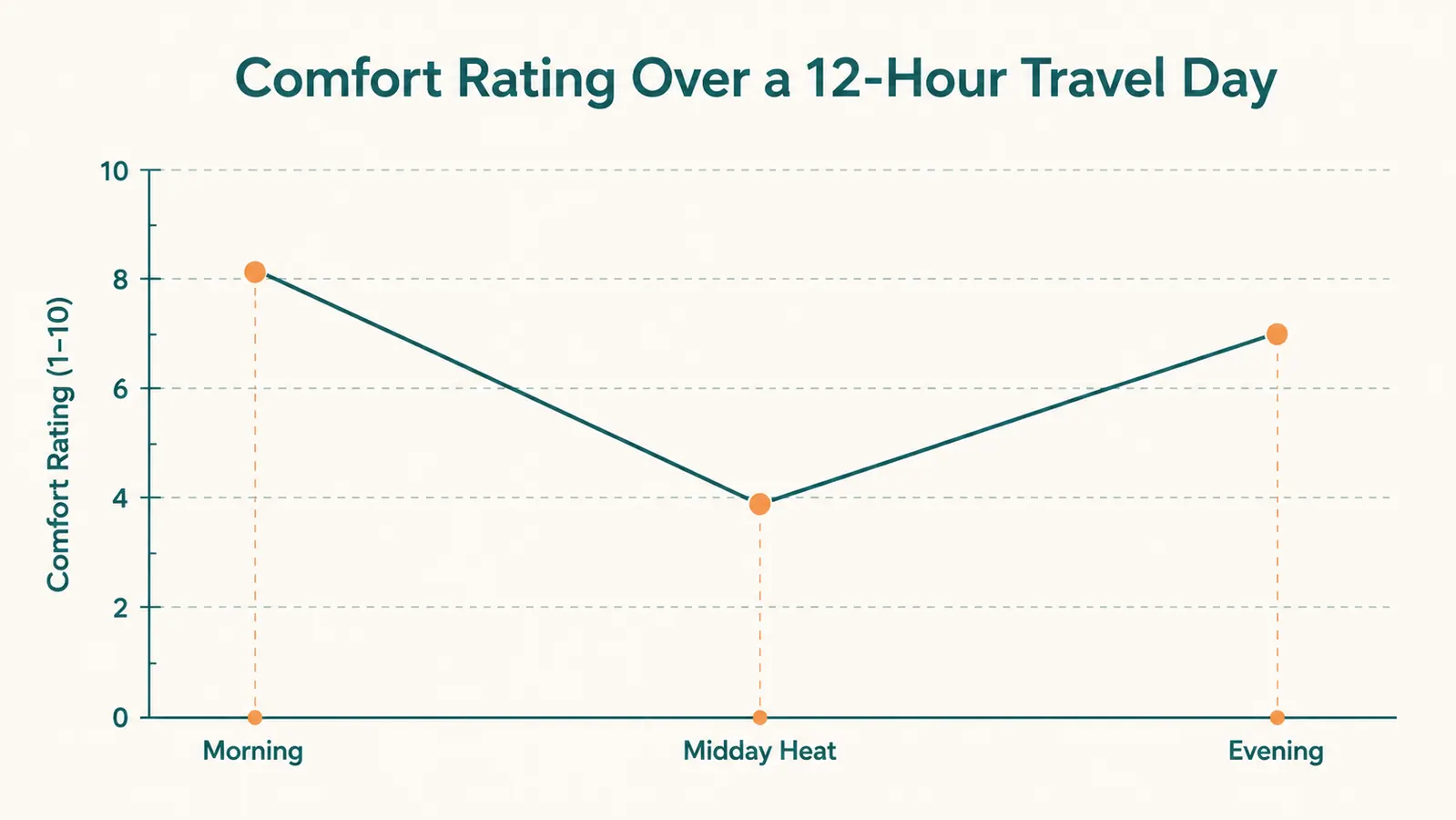
I tracked three things across the trip: how many times I actually reached for cash or my passport while wearing it, how it felt after 8+ hours in heat versus cold, and whether the RFID blocking claim held up when I tested it against my own contactless credit card reader at home before the trip. I also kept a rough log in my phone's notes app after long walking days, rating comfort on a simple 1 to 10 scale so I wasn't just relying on memory by month five. I compared notes against a neck wallet I'd used on a previous trip to Peru, which was cooler against the skin but far slower to access at borders, and against a slash-proof sling bag that worked fine for cash but never felt right for a passport.
What's Actually in the Design
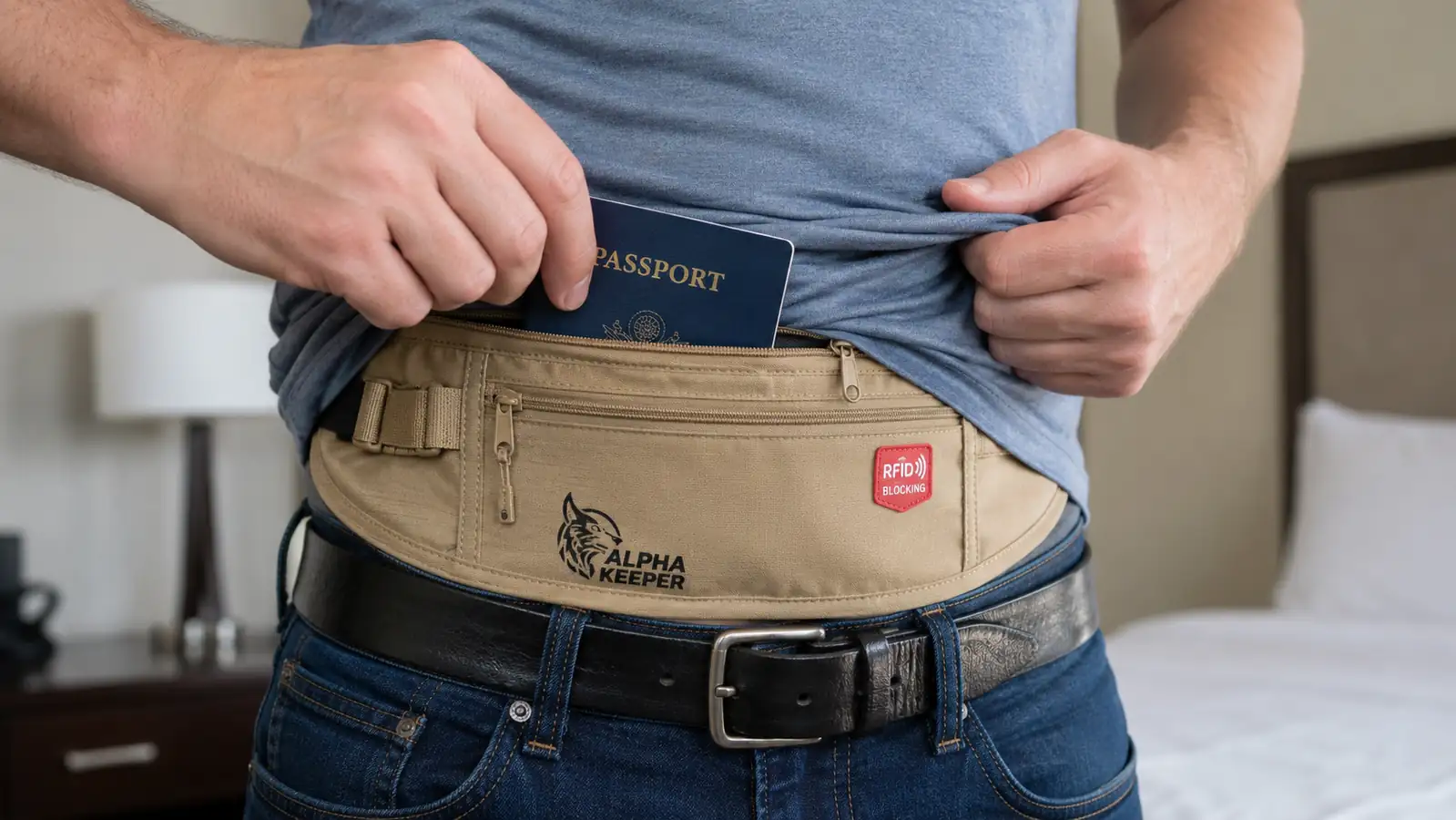
The Alpha Keeper is a flat, fabric pouch on an adjustable elastic strap that sits around your waist, worn under your shirt or pants. It has two main compartments: a larger back pocket sized for a passport and folded bills, and a slimmer front pocket meant for cards. The zippers are decent quality, not the flimsy plastic kind that catch fabric and jam, and they've held up through what I'd estimate is a few hundred open-and-close cycles at this point.
The material is a lightweight, slightly stretchy polyester blend that breathes better than I expected going in. I was worried it would feel like wearing a plastic bag against my skin in humid climates, and in Bangkok in June, that was a real concern given how the air there sits on you the second you step outside. It didn't turn into a swamp, though it did get warm by the end of a full day, and I noticed the fabric held a faint smell of sweat by evening on the hottest days that a quick hand-wash always fixed.
RFID blocking is built into the card compartment lining. I don't carry a contactless-enabled credit card as my primary, but I tested it with one I keep for exactly this purpose, holding my phone's NFC reader against the pouch from a few inches away with the card inside. No read. That's not lab-grade proof, but it's more than most buyers will ever bother checking themselves, and it gave me enough confidence to stop worrying about it on crowded subway cars where skimmers have actually been reported.
Sizing and the Elastic Strap
The strap is one-size-fits-most with a good range of elastic adjustment. I'm about 5'10", 175 pounds, and I had it snug at roughly the midpoint of the adjustment range. My travel partner, who's smaller, had it cinched down near the tightest setting and said it still felt secure without digging in. I'd guess this comfortably fits waist sizes from about 28 to 44 inches based on how much slack was left on both ends, though anyone at the very top or bottom of that range should double check the listing measurements before buying.
Comfort Over a Full Travel Day
This is where most money belts fail, and it's the thing I paid closest attention to. The honest answer: it's genuinely comfortable for the first 6 to 8 hours, and it starts to feel noticeable, not painful, after that. I'd rate it a solid 9 out of 10 for the first half of any travel day and closer to a 6 by hour ten on a hot, active day.
On travel days where I was sitting a lot (trains, flights, long lunches), I barely noticed it was there by hour four. On the days I was walking for hours in heat, like the Marrakech souks in August-level temperatures even though it was technically spring, I started adjusting it by early afternoon. Sweat builds up against the fabric, and the elastic strap can start to feel like it's riding slightly higher or lower than where you started, which meant a quick readjustment in a doorway or side alley every couple of hours.
It never chafed to the point of a mark or irritation, which surprised me given how much walking I did in it. I attribute that to the soft edge binding on the strap, which is a small detail a lot of cheaper belts skip, usually leaving a raw seam that digs in after a few hours of hip movement.
Getting Things In and Out Without Looking Suspicious
The whole point of a hidden money belt is defeated if you have to do a full strip-tease in the middle of a train platform to get your passport out. I got genuinely fast at this after a couple weeks. The trick is wearing it low enough that you can reach up under an untucked shirt hem and unzip the back pocket without lifting your shirt more than a few inches.
At passport control, I'd usually step slightly to the side, turn my body away from the general foot traffic, and have my passport out in under 10 seconds once I got the motion down. Early on it took closer to 30 seconds and felt awkward, and I definitely got a couple of odd looks from a border agent in Zagreb who clearly wondered what I was doing. By month two it was second nature and nobody around me seemed to notice at all.
The zipper pulls are small, which is good for concealment but occasionally annoying if your hands are cold or you're rushing. I never actually failed to get it open, but a couple of times in Croatia in cooler weather it took an extra fumble, enough that I started practicing the motion at home before trips where I knew I'd need quick access at busy checkpoints.
Who I'd Recommend This To
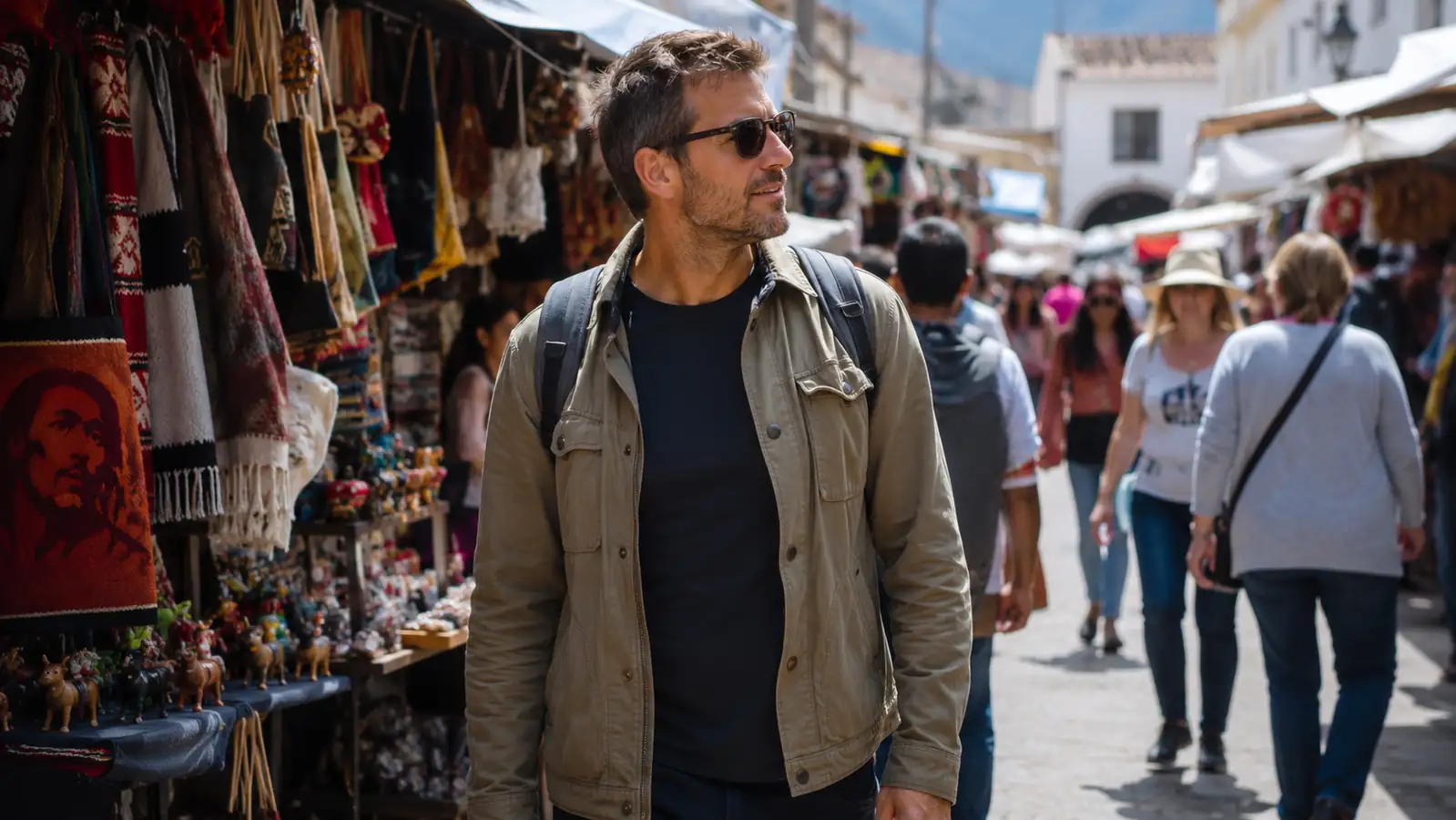
If you're traveling somewhere with a real pickpocketing reputation (Barcelona, Rome, Paris metro, parts of Southeast Asia, crowded markets anywhere), and you're carrying your actual passport and meaningful cash on your person for stretches of the day, this earns its place. It's also genuinely useful on long transit days where you don't want your daypack out of arm's reach but also don't want your passport in an outside pocket, like overnight trains or long layovers where you're dozing on and off in a public terminal.
It's overkill for a resort trip where your documents stay in a hotel safe the whole time. I didn't wear mine once during a beach week in Croatia where I never left the property with more than a room key and 20 euros, and it sat unused at the bottom of my bag the entire stay. I've also skipped it on short domestic flights where I'm carrying a driver's license instead of a passport and only a small amount of cash, since the upside just isn't there for a two-hour hop between cities.
Where It Falls Short
Two honest complaints after six months. First, in real heat and humidity, it holds sweat against your skin more than I'd like, and by the end of a 90-degree walking day I wanted it off. Second, the card compartment is snug. I could fit three cards and a folded twenty comfortably, but once I tried cramming in a fourth card plus larger bills, the zipper started to strain, and I worried about it eventually giving out under that kind of stress.
I also noticed some slight discoloration on the elastic strap after about four months of near-daily wear and hand-washing. Purely cosmetic since it's worn under clothes, but worth knowing if you're expecting it to look brand new a year in. None of this affected function, but a buyer who cares about long-term appearance should go in with realistic expectations.
What I Liked
- Genuinely comfortable for 6-8 hours of wear, even walking
- RFID-blocking card pocket tested and confirmed against an NFC reader
- Soft-edge strap binding prevented chafing over months of use
- Fast, discreet access once you learn the motion
- Fits a passport, cards, and folded bills without excess bulk
Where It Falls Short
- Gets warm and holds sweat in real heat after several hours
- Card compartment is snug once you try to fit more than 3 cards plus cash
- Small zipper pulls can be fumbly with cold hands
- Elastic strap shows minor cosmetic wear after months of daily use
The real test isn't whether it stops a pickpocket in a dramatic moment. It's whether you actually keep wearing it on day 140 of a trip. I did.
Who This Is For
This is for the traveler who's going to be in crowded transit hubs, markets, or tourist-heavy areas with their passport and real cash on them for hours at a stretch, and who wants that risk handled without thinking about it constantly. It's especially worth it if you've had a close call before, a bump in a crowd, a hand near your bag, anything that made you paranoid for the rest of a trip. This takes that specific anxiety off the table, and after six months I genuinely stopped thinking about my back pocket at all, which was the whole point.
Who Should Skip It
If your trip is mostly resorts, rental cars, and places where your documents live in a safe, you don't need to add a layer of clothing you'll never use. And if you run hot naturally or you're traveling somewhere consistently above 85 degrees with heavy walking, you may want to pair this with a neck wallet for cooler days and reserve the waist belt for higher-risk outings only, switching between the two depending on the day's plan. A slim neck wallet or even a zippered inner pocket sewn into a jacket can cover you just as well on those lower-risk days, and I've started rotating between the two depending on the itinerary rather than defaulting to the waist belt for absolutely everything.
Eight Countries, Zero Close Calls With My Passport
That's not luck, it's just not carrying my documents somewhere a stranger's hand can reach. See today's price on the exact Alpha Keeper money belt I've worn since January.
Amazon Check Today's Price on Amazon →