
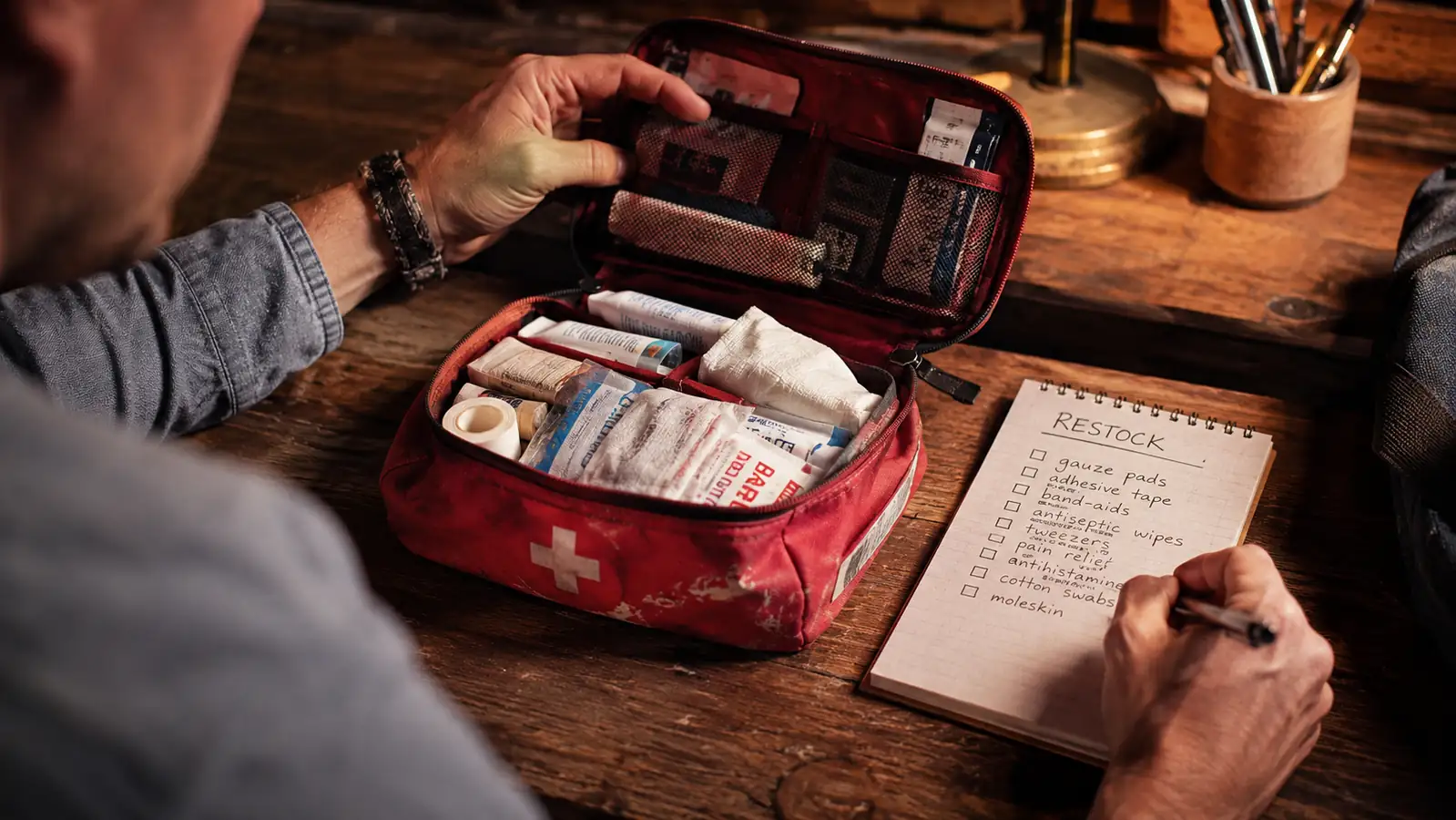
Nobody tells you a first aid kit needs upkeep. I assumed, like most people probably do, that you buy one of these kits once, toss it in a suitcase, and it just sits there being ready forever like a fire extinguisher. That's not how the First Aid Only 298 Piece kit actually works, and after a full year of owning one, I want to write the review I wish existed before I bought it. Not the six-month honeymoon version. The year-later, I-paid-for-this-myself, here's-what-nobody-mentions version.
I bought the First Aid Only kit with my own money after a friend recommended it following a bad experience trying to find a bandage in a hostel in Croatia. No brand sent it to me, nobody's paying me to say nice things about it, and I have zero problem telling you where it falls short, because a couple of the shortcomings genuinely annoyed me by month eight.
The Quick Verdict
Solid core, real filler, and a maintenance requirement nobody mentions in the five-star reviews. Worth owning if you're willing to treat it like a living kit, not a checkbox purchase.
Amazon Check Today's Price →The Version of This Review Amazon Doesn't Show You First
Most reviews are written in the first two weeks, before anyone's actually restocked, degraded, or gotten annoyed by the filler. This is the one-year-later truth.
Amazon Check Today's Price on Amazon →How I Actually Used It
Over twelve months this kit rode along on eleven separate trips: three work trips to Chicago and Austin, a ten-day drive down the Pacific Coast Highway with my brother, a week in Croatia and Slovenia, a handful of weekend camping trips within a few hours of home, and enough random Tuesday errands where it just lived in the trunk of my car that I stopped thinking of it as a "travel" kit and started thinking of it as a "life" kit. That distinction matters, because the way I actually used it looked nothing like the polished scenario on the Amazon listing photos.
The real uses were smaller and stranger than I expected going in. A blister from broken-in hiking boots that weren't actually broken in, on day two of the coast drive, treated with moleskin at a gas station parking lot in Monterey. A bee sting on my brother's forearm outside a campground bathroom that needed the antihistamine tablets and an ice pack, not a bandage at all, which told me something about how differently this kit gets used than I originally pictured. And a split fingernail, of all things, caught on a car door in a Zagreb parking garage, that needed the small scissors and a bandage wrap more than anything dramatic.
None of that is the bloody-thumb-in-a-kitchen story you'll read in the glowing reviews. It's quieter than that. Most of what a travel first aid kit actually handles is small and undramatic, and that's exactly the part nobody prepares you for when they're selling you on 298 pieces. You picture using it for something that feels like an emergency. In reality you'll use it for a bee sting and a hangnail, and honestly, that's fine. That's what it's for. I've talked to other travelers who bought a similar kit expecting to use it once on some dramatic trip story, then felt vaguely let down when the actual use cases turned out to be this ordinary. I'd flip that expectation on its head. Ordinary and frequent beats dramatic and rare every time you're the one standing there needing it.
What Nobody Tells You Before You Buy This
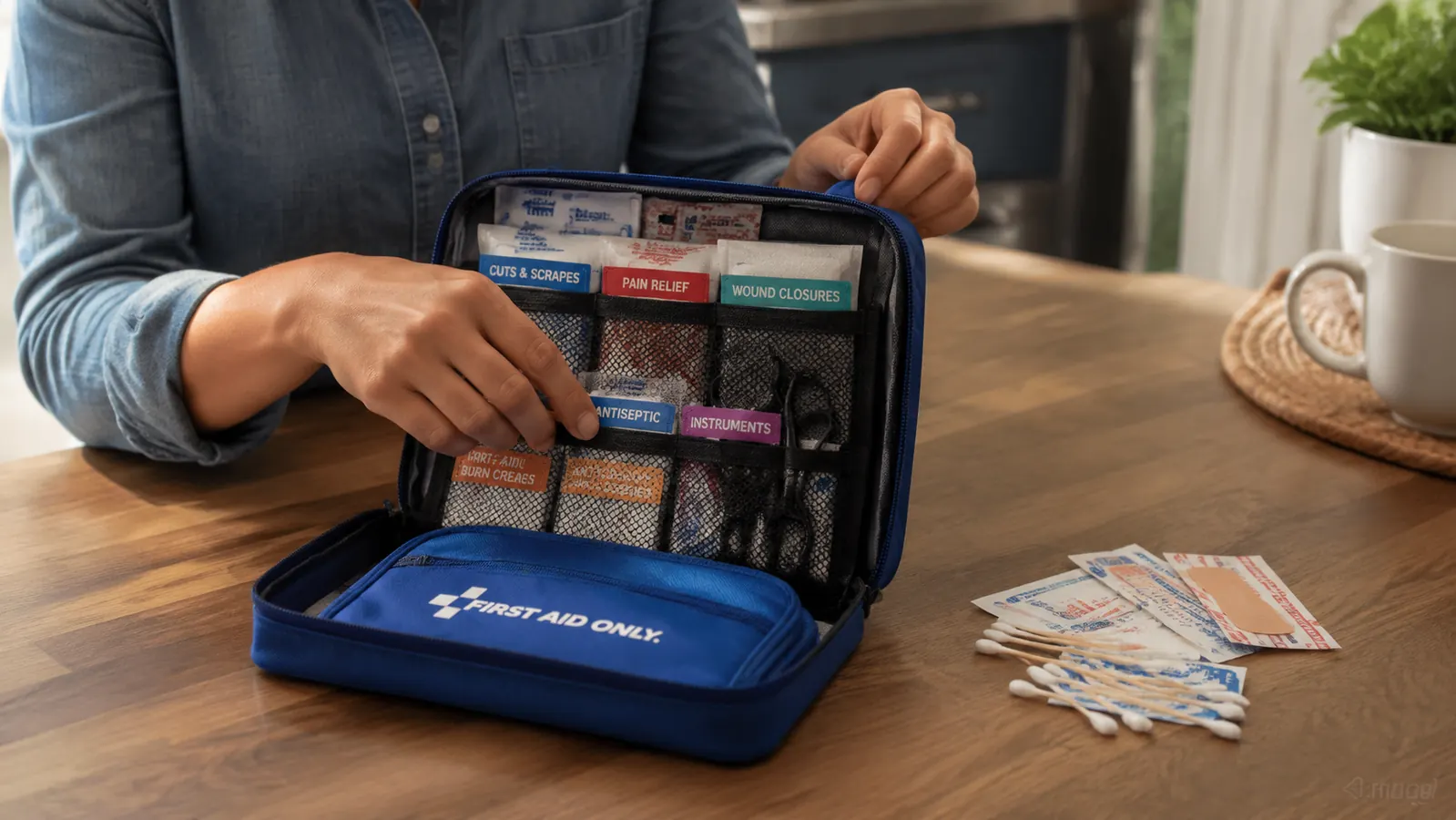
Here's the thing the five-star reviews skip past. This kit is not a closed loop. You will use it up, and if you don't actively track what's gone, you'll open it during an actual moment of need and find an empty compartment where the gauze used to be. I learned this the hard way in Slovenia, reaching for antiseptic wipes after the parking garage fingernail incident and finding I'd used the last one three weeks earlier on my niece's scraped elbow at a birthday party and never replaced it. I ended up using a hotel mini bottle of vodka as a makeshift antiseptic, which worked, but is not a solution I'd recommend leading with.
Nobody mentions that maintaining this kit is basically a small recurring chore, not a one-time purchase. I now keep a running note on my phone of what I've used so I can restock before the next trip instead of finding out mid-trip. That's not a flaw exactly, every consumable kit works this way, but it's not something the product listing tells you, and it's the single biggest gap between how this kit gets marketed and how it actually lives with you.
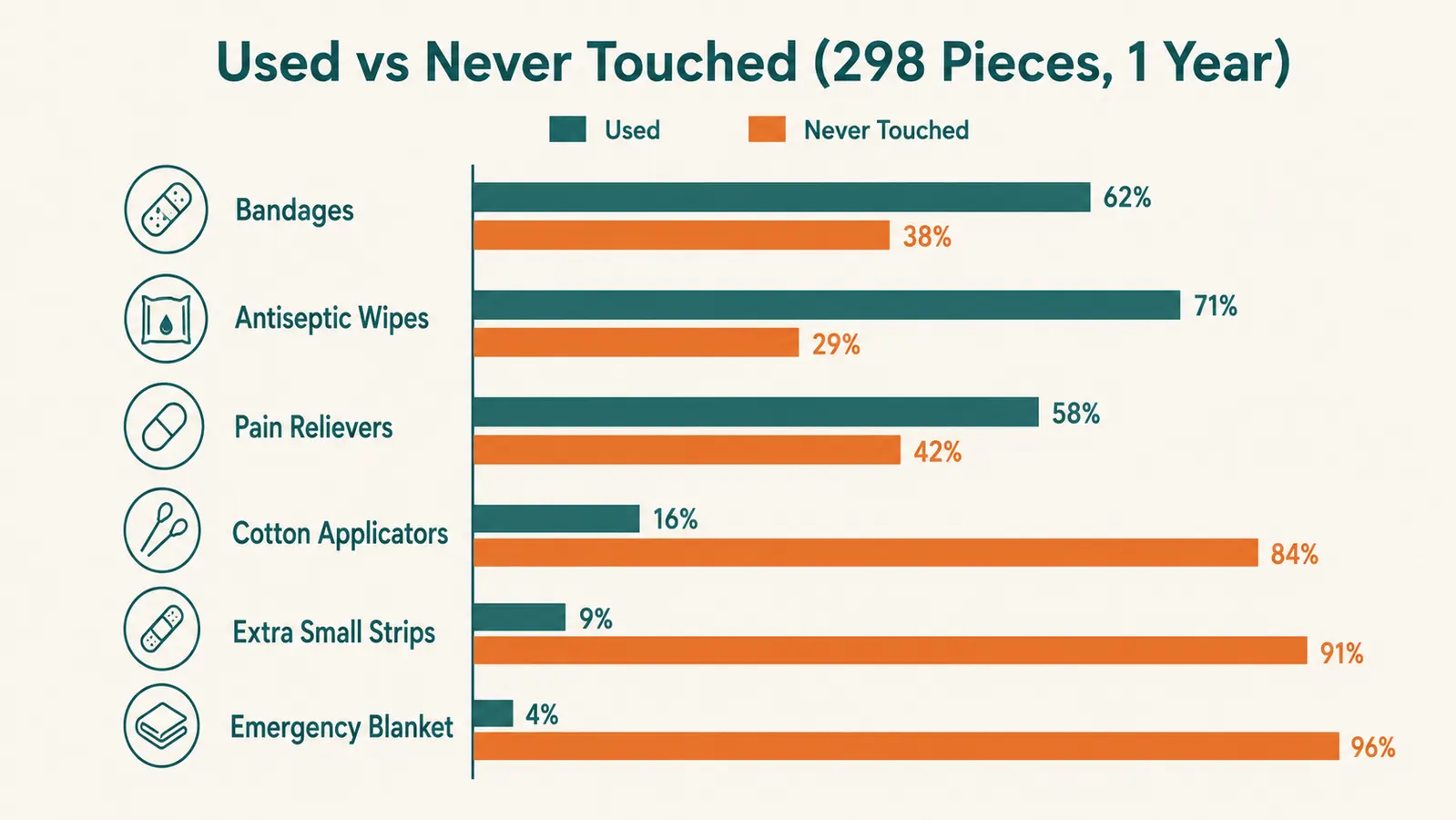
The other thing nobody tells you is how much of the 298-piece count is genuinely filler, and I mean that more bluntly than most reviews will say it. After a full year, I went through every compartment and separated what I'd used from what I hadn't. The cotton-tipped applicators, a stack of the narrowest adhesive strips, and honestly the folded emergency blanket all sat completely untouched for twelve straight months. That's not a small percentage of the kit. If you added up the pieces I never once reached for, it's probably close to a third of the total count. The 298 number sells the kit, but it's not an honest measure of how useful the kit is.
There's a smaller, sneakier thing nobody mentions too. The kit ships packed so tightly and neatly that the first time you actually pull four or five items out mid-trip, you can't get it to zip back up the same way. It's a minor annoyance, but it's the kind of detail that only shows up once you've actually used the thing, which is exactly why the two-week reviews never catch it. Give it a few months of real use and the pouch develops a slightly looser, lived-in shape that zips easier, but that first rough patch caught me off guard on the coast drive.
The Restocking Reality
I want to be specific about cost here because most reviews are vague about it. Over the year, I restocked this kit four separate times, spending somewhere between five and nine dollars each time depending on what the pharmacy had in stock and whether I was buying a box of bandages I only needed six of. Total, I probably spent close to thirty dollars keeping this kit topped off on top of the original purchase price. That's not a dealbreaker, but if you're comparing the sticker price of this kit to a cheaper alternative, factor in that any kit you actually use is going to cost you more than the box price over time. The kits that stay cheap forever are the ones sitting in a closet unopened.
I also noticed something by month ten that I hadn't expected. A couple of the ointment packets had started to separate slightly, the kind of thing where the texture just isn't quite right anymore, likely from a summer spent in a hot car trunk more than actual expiration. Nobody warns you that heat exposure ages these products faster than the printed date suggests. If your kit spends real time in a hot vehicle, check the ointment and cream packets by hand every few months rather than trusting the shelf life printed on the box.
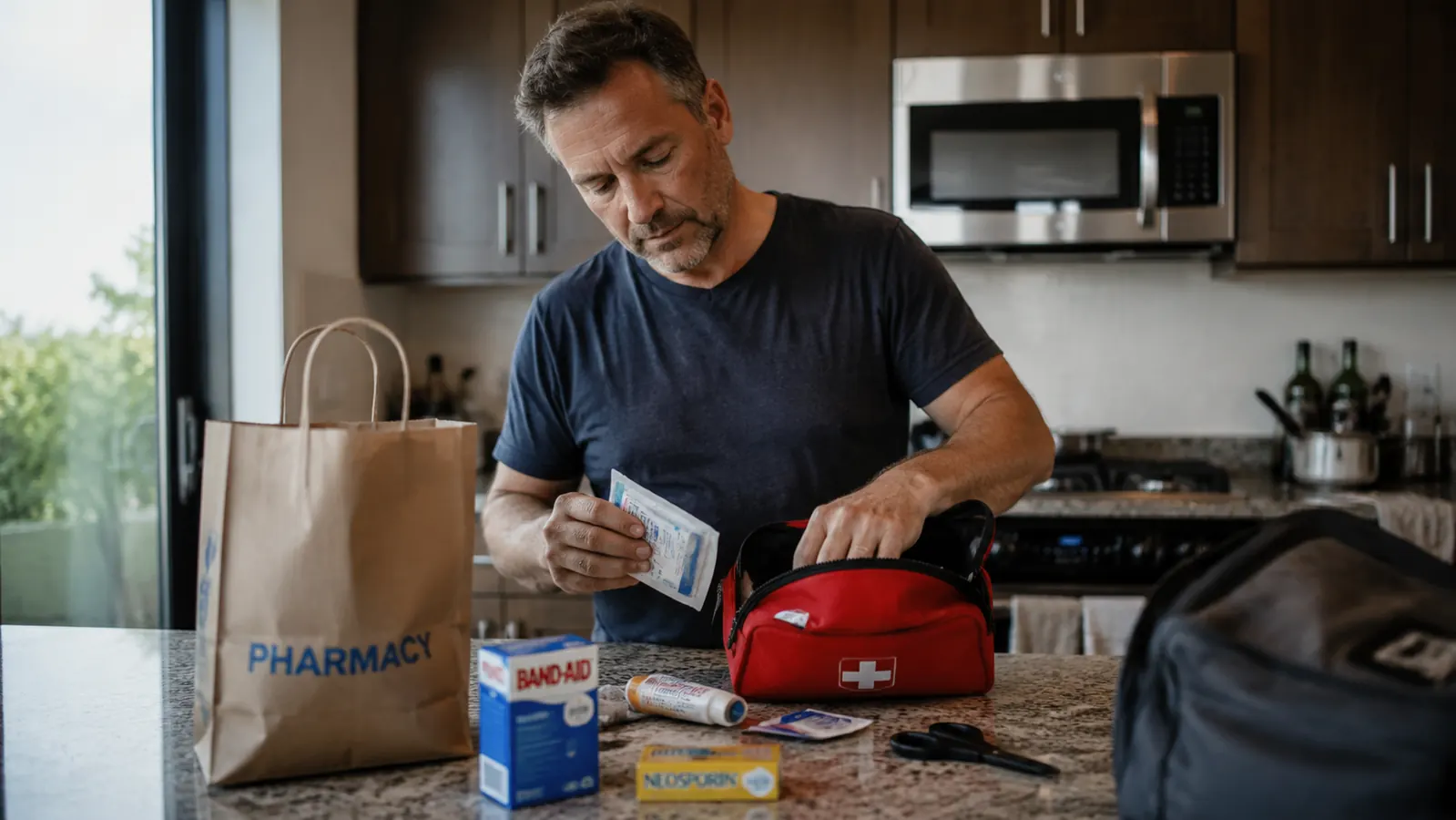
One habit that's made the restocking less annoying: I buy replacement bandages and antiseptic wipes in slightly larger boxes than I need and keep the overflow in a drawer at home, rather than making a special pharmacy trip every time the kit runs low. It costs a little more upfront but means I'm never caught restocking the night before a flight, which is exactly the kind of last-minute scramble this kit is supposed to prevent in the first place.
Where the Kit Genuinely Impressed Me
I don't want this to read as a takedown, because the parts that work, genuinely work well, and I'd still buy it again knowing everything I know now. The compartment layout held up to a year of being crammed into a duffel, a packing cube, and a car door pocket without the internal dividers tearing loose. That's not nothing. I've owned cheaper organizer pouches that fall apart at the seams inside of a few months, and this one hasn't.
The bandage variety turned out to be more useful than I expected going in. I assumed one size fits most situations, but having knuckle bandages, larger pad bandages, and the standard strips actually mattered across a year of different injuries on different parts of the body. The moleskin, while limited in quantity, is genuinely good moleskin, better than the stuff I've bought separately at a drugstore, and it's the single item I've been most careful to restock immediately after using because it's saved more than one hike.
I'll also say the price held up better than I expected against everything else in this category. I've looked at competitor kits since buying this one, partly out of curiosity and partly to make sure I wasn't overpaying, and most of them either cost more for a smaller compartment count or cut corners on the pouch material in ways that showed within a few months. This one didn't feel like it was cutting a corner I'd notice later, aside from the filler pieces, which every kit in this price range seems to include in one form or another.
What I Liked
- Bandage variety across sizes covers more real injuries than a single-size pack would
- Compartment pouch survived a full year of rough travel with zero tearing
- Moleskin quality is genuinely better than most drugstore equivalents
- Compact enough to live in a car trunk permanently without feeling wasteful
- Antihistamine and ibuprofen tablets got real, repeated use across unrelated trips
Where It Falls Short
- Roughly a third of the 298 pieces went completely untouched in a full year
- No built-in way to track what you've used, you have to do that yourself
- Ointment packets showed heat degradation faster than the printed shelf life suggests
- Restocking adds real ongoing cost that isn't mentioned anywhere on the listing
- Pouch gets harder to zip back to its original shape after the first few uses
- Not built for anything beyond common, minor injuries
The 298-piece number is a marketing figure, not an honesty metric. A third of it sat untouched for a year. The other two-thirds earned their keep more than once.
What I'd Tell a Friend Before They Buy
If a friend asked me straight up whether to buy this, I'd say yes, but I'd also hand them a mental checklist first. Expect to restock it, budget for regular refills every few months if you're an active user, not a closet owner. Expect a chunk of what you paid for to sit unused, and don't let that sour you on the parts that do get used constantly. And check it physically every couple of months if it lives somewhere hot, because the ointments age faster than the box implies. I'd rather a friend go in with slightly lowered expectations and end up pleasantly surprised than buy it expecting a flawless, self-sustaining system and feel burned eight months in when a compartment turns up empty.
I'd also tell them the honest use case is smaller and quieter than the marketing suggests. You're not buying this for a dramatic emergency most of the time. You're buying it for a bee sting, a blister, a headache during a layover, a kid's scraped knee, a split fingernail. That's the real job the First Aid Only kit does, and it does that job well. If you go in expecting drama, you'll be a little disappointed. If you go in expecting to handle the small stuff without a frantic pharmacy search in a country where you don't speak the language, it delivers exactly that.
And I'd tell them not to buy it as a one-time purchase and forget about it. The kits that actually save you on a trip are the ones somebody kept an eye on. Set a reminder every few months to open it up, check what's low, and swap out anything that looks off. It takes ten minutes and it's the difference between a kit that's ready when you need it and one that quietly let you down at the exact wrong moment.
Who This Is For
This is for the traveler who's willing to treat the kit as something living, not a one-and-done purchase. Families, road trippers, and anyone who spends real time away from their own medicine cabinet will get their money's worth many times over, especially if they're honest with themselves about restocking instead of assuming the kit refills itself.
Who Should Skip It
Skip it if you want a true set-it-and-forget-it purchase. This kit rewards people who open it, use it, and put fresh supplies back in. If you're the type who'll toss it in a closet and never look at it again, a cheaper, smaller kit will serve the same purpose for less money, since you'll likely never notice the difference in what's inside. And if you're doing serious backcountry travel, this was never designed to replace a real trauma kit, so don't expect it to cover anything beyond the common, everyday stuff.
Now You Know What the Five-Star Reviews Leave Out
A third filler, two-thirds genuinely useful, and a small ongoing cost nobody mentions. Knowing all that, it's still the kit in my car a year later.
Amazon Check Today's Price on Amazon →