
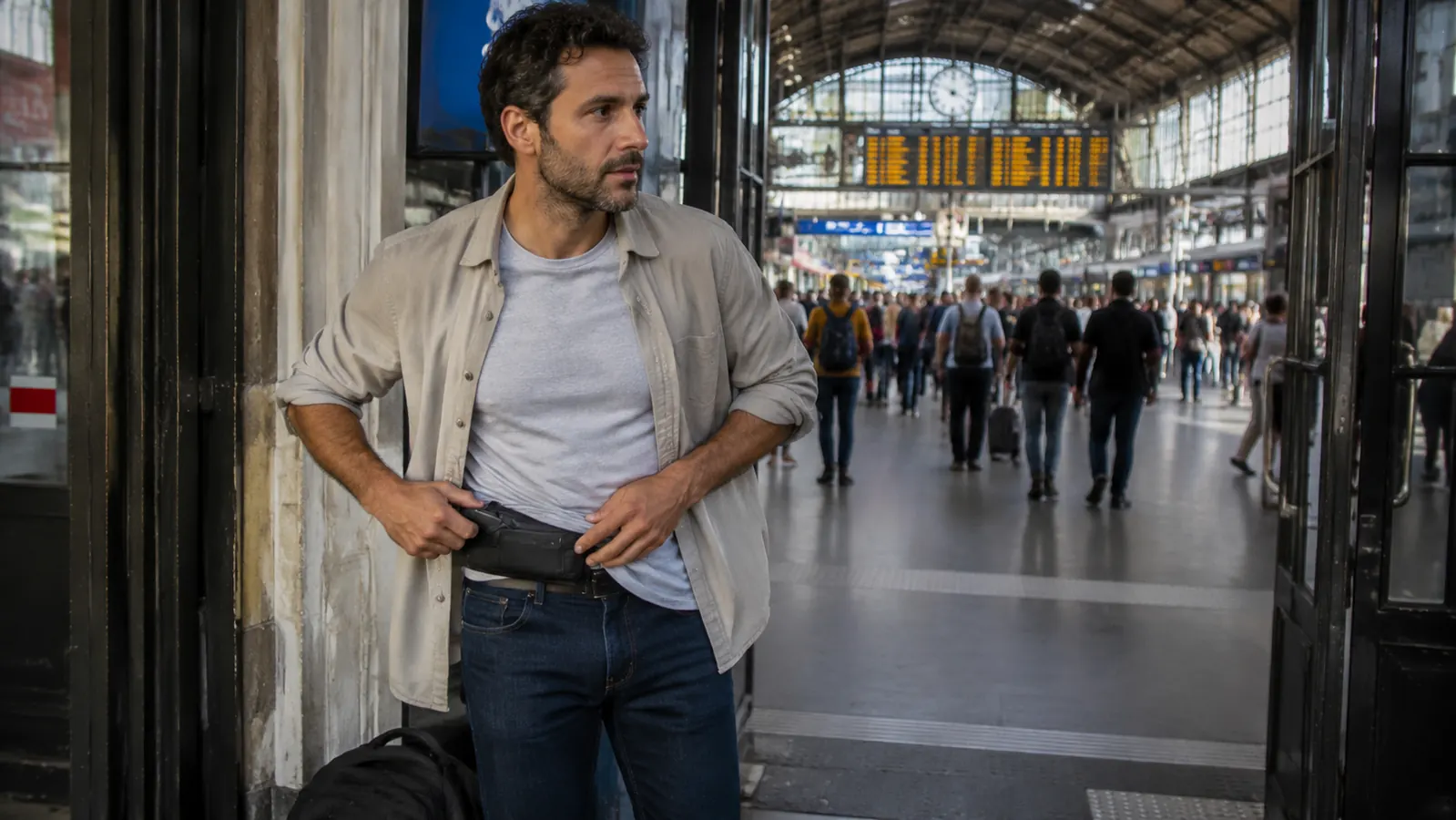
I got pickpocketed exactly once, on a packed metro platform in Barcelona in 2019, and it cost me forty euros and about an hour of adrenaline. It could have cost me my entire trip. My passport, my emergency cash, and my backup card were all in the same slim wallet in my back pocket, because that's what I'd always done at home and it had never once been a problem. Abroad, in a crowd, it's a completely different risk. That trip is the reason I now run every cash and document strategy through one rule: nothing important ever sits in one place. The tool that makes this actually workable day to day is a hidden money belt, the kind that sits flat under your clothes and holds your passport, backup cards, and reserve cash where a pickpocket, a distracted moment, or a bag left unattended for ten seconds can't touch it.
This guide is the system I use on every international trip now, five steps, built around the Alpha Keeper money belt I've worn through a dozen countries. It's not complicated and it doesn't require carrying a bag stuffed with gear. It just requires deciding, before you leave your hotel room every morning, exactly what goes where.
Get the belt before you build the system
Everything below assumes you've got a slim, RFID-blocking money belt to work with. I wear the Alpha Keeper under my waistband on every trip, it holds a passport, cards, and folded bills without printing through a shirt.
Amazon Check Today's Price on Amazon →Step 1: Split your money into three tiers before you leave the hotel
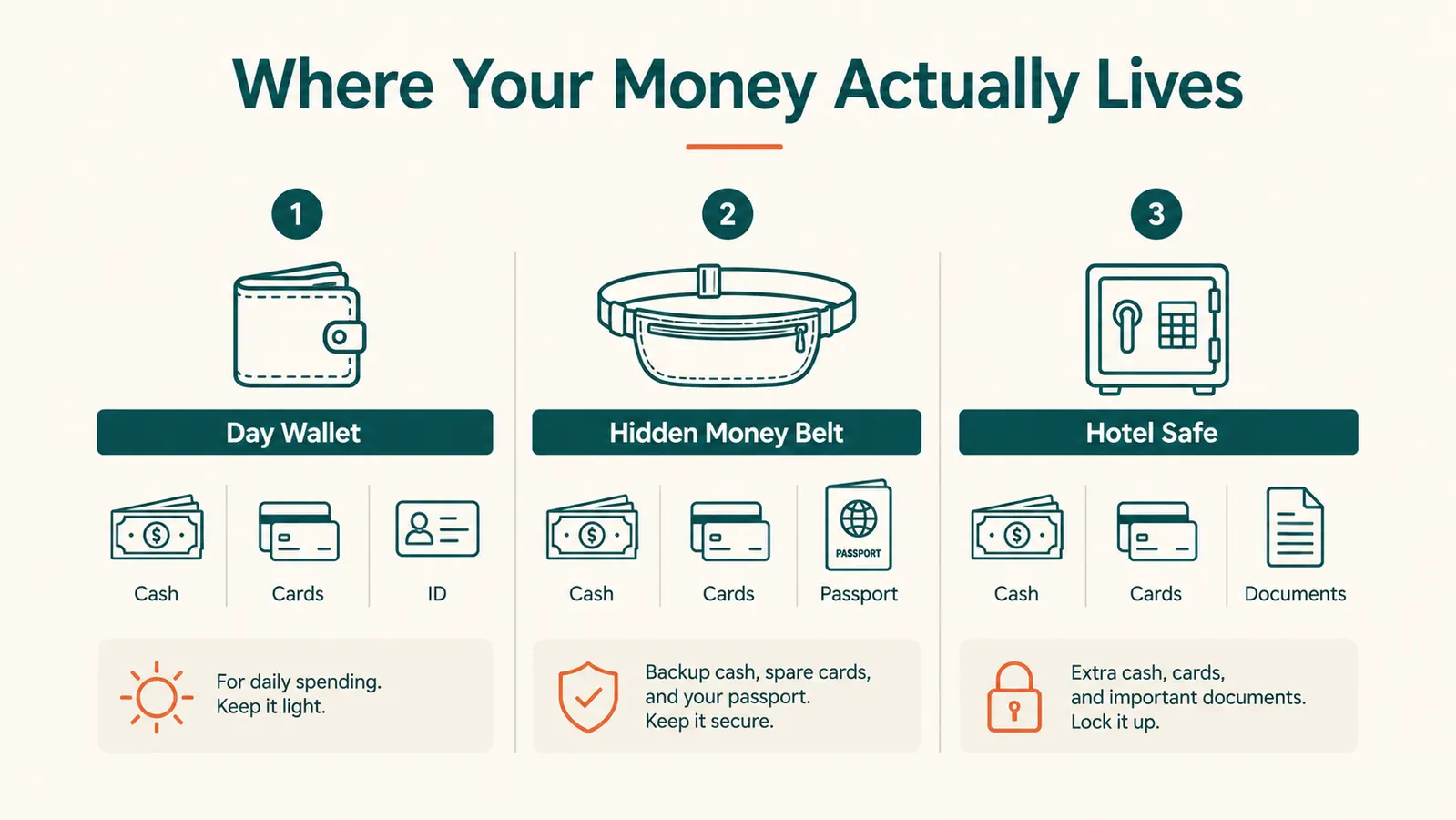
The whole system falls apart if you treat your money as one pool. Instead, I split it into three tiers every single morning. Tier one is what I call day cash, the amount I'm actually willing to lose if something goes wrong, usually a modest amount in local currency plus my daily-use debit card. That goes in a normal front-pocket wallet, the kind you'd use at home. Tier two is backup cash and a secondary card, enough to get me through if my day wallet gets lost or stolen, and that goes in the money belt under my clothes. Tier three is reserve cash and any card I'm not using that day, and that stays locked in the hotel safe. I keep the three tiers in my head as a simple ladder, front pocket, waist, safe, and I never let cash or a card skip a rung. It sounds rigid the first few days of a trip, but it becomes automatic fast, the same way checking for your keys becomes automatic when you leave an apartment.
The logic is simple. If tier one gets taken, which is the most likely scenario since it's the thing exposed to the world all day, I've lost forty dollars and a card I can cancel with an app. My trip continues uninterrupted because tiers two and three are untouched and I don't even have to think about it in the moment. I learned to actually do this after Barcelona, where everything was in tier one because I hadn't split anything, and losing my wallet meant losing my passport too.
I do this split every morning, not once at the start of the trip. It takes ninety seconds standing at the hotel desk or bed, counting out what the day actually needs, and it means I'm never carrying more exposed cash than I'm comfortable losing, no matter how the day goes.
Step 2: Wear the money belt against your skin, not over your clothes
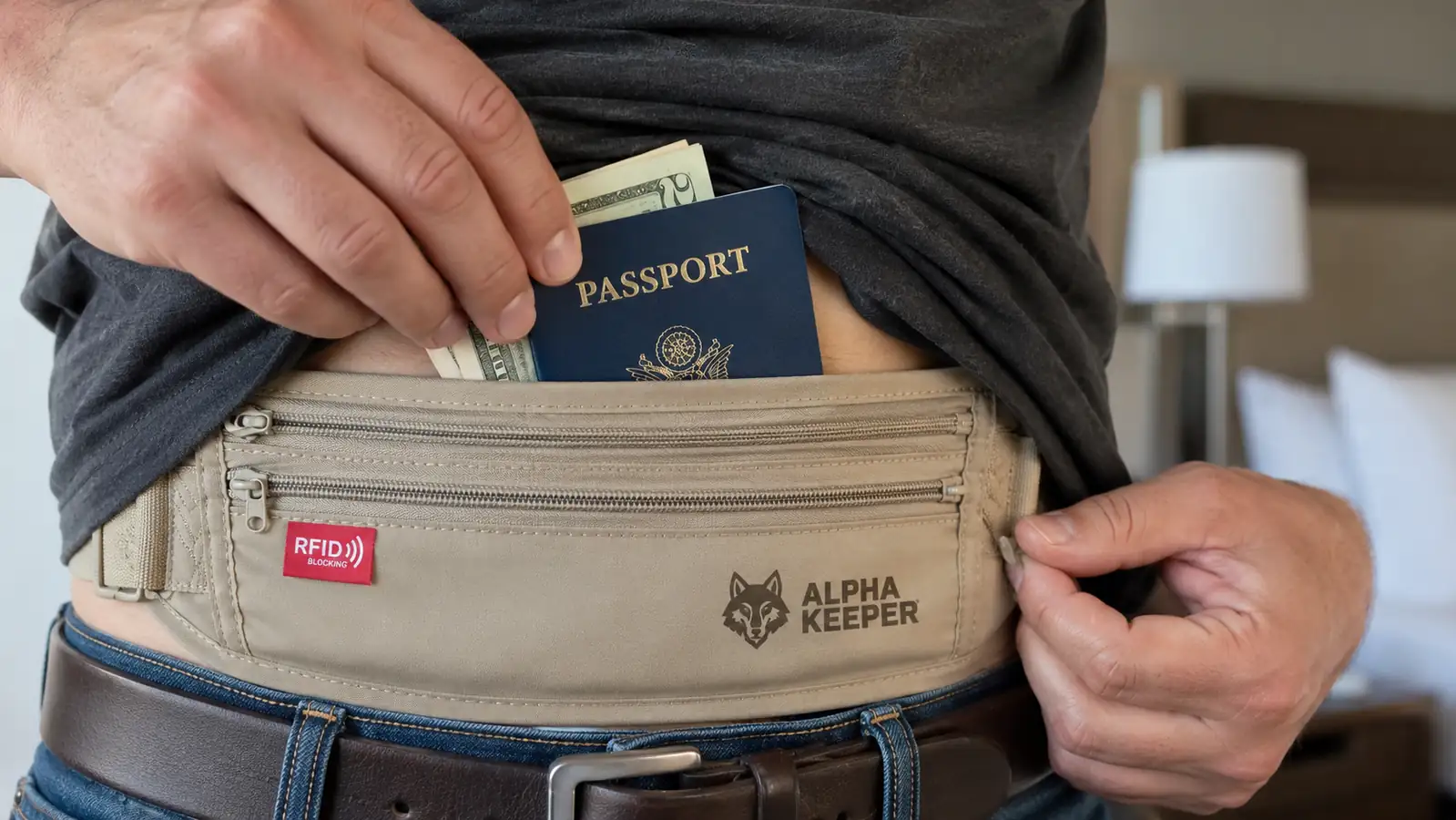
This sounds obvious but I see travelers get it wrong constantly. A money belt only works as a deterrent if nobody knows it exists, which means it goes under your shirt, against your skin or your undershirt, at your waist or slightly higher on your torso depending on the cut of your clothes. I wear mine just above my belt line, under an untucked shirt, and I've had strangers stand next to me on a crowded train with zero indication I'm carrying my passport and two hundred dollars in reserve cash. I've also started paying attention to how I move in crowds while wearing it. On a packed subway car or a jostling market aisle, I keep one hand loosely near my waistband, not gripping it, just aware of it, the same instinct you'd use guarding a phone in a back pocket. It's a small habit that costs nothing and adds one more layer between me and anyone working a crowd.
The Alpha Keeper is built slim enough that this actually works. It's not a bulky fanny pack that prints through fabric, it's a flat pouch that sits close to the body, which matters more than people expect. I tried a thicker neck wallet on an earlier trip and gave up on it within two days because it created a visible bulge under every shirt I owned and I found myself constantly adjusting it in public, which defeats the entire point of hiding it in the first place.
One adjustment I made after a hot, humid trip through Southeast Asia, don't overstuff it. I keep mine to a passport, one backup card, and folded bills, nothing more. A money belt crammed full of receipts, extra cards, and coins gets uncomfortable fast in the heat, and discomfort is exactly what makes people start touching it in public, which is the one thing you're trying to avoid.
Step 3: Never open the money belt in public
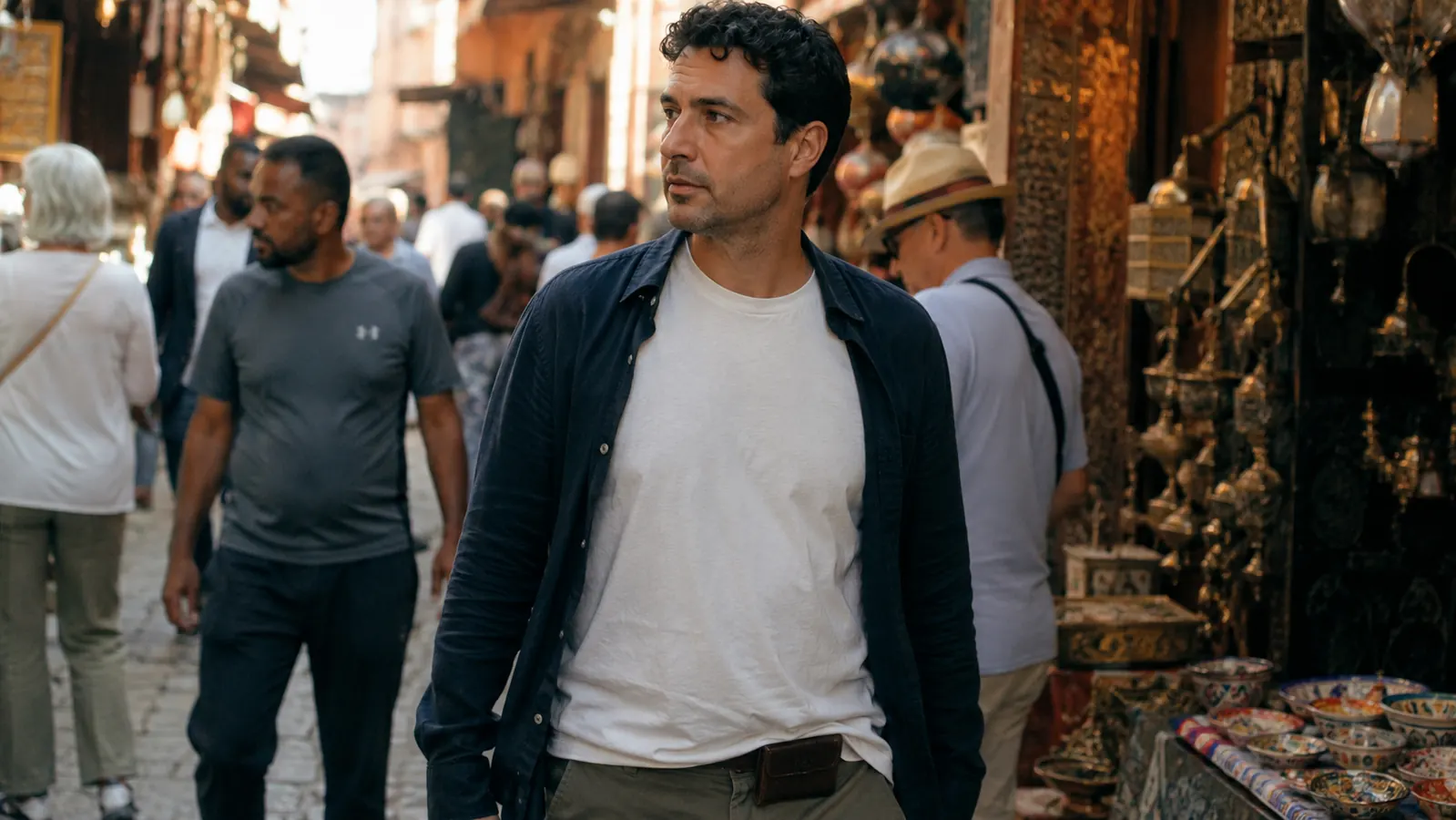
This is the rule that actually protects you day to day, more than the belt itself. The entire security value of a hidden money belt evaporates the moment you lift your shirt at a market stall to dig out cash, because now everyone around you knows exactly where your money lives. I only access mine in a locked bathroom stall, a hotel room, or somewhere genuinely private, never at a register, never on a street corner, never at a train ticket window. I've also started telling travel companions the same rule applies to them. On a group trip to Mexico City, my brother-in-law kept pulling his money belt out at food stalls to count pesos in the open, and it took one conversation to get him to switch to using his day wallet like everyone else and saving the belt for genuinely private moments.
This means the tier-one day wallet has to actually carry enough for a normal day, because you're not going back to the money belt mid-afternoon to top it up. If I'm heading somewhere I expect to spend more than usual, a day trip with an entrance fee and a big lunch, I adjust the morning split accordingly instead of planning to dip into the belt later. Planning ahead like this took me a couple of trips to get consistent at, but now it's automatic.
I've made an exception exactly twice in five years, both times ducking into an empty stairwell in a mostly deserted train station to grab reserve cash after an ATM ate my card. Both times I checked my surroundings first and made it quick. That's the standard, genuine privacy or don't do it at all.
Step 4: Photograph and back up every document before you need to
Before I even pack the money belt, I take a clear photo of my passport's information page, my driver's license, and the front and back of every card I'm bringing, and I email them to myself and to my wife. This has nothing to do with preventing theft and everything to do with what happens after theft, if the money belt itself is ever lost or stolen despite everything, having a photo of the passport page cuts the embassy replacement process down from a genuinely miserable multi-day ordeal to something that can often be handled same-day.
I also write down the international collect-call numbers on the back of my cards for reporting a loss, since roaming data doesn't always work the instant you need it and hunting for a bank's number on a spotty connection at 2am in a foreign country is its own kind of stressful. A small note in my phone's notes app, saved offline, has everything I'd need to make those calls without internet.
This step costs ten minutes before the trip even starts and it's the single biggest reason a worst-case scenario stays a bad afternoon instead of a ruined week. I do it every time now, even on short domestic trips, because the habit only works if it's automatic.
Step 5: Use the hotel safe for anything you don't need that day
The money belt is for what you need with you. Anything you don't need for the day's activities, extra cash, a spare card, your actual passport if you're staying somewhere long enough that you don't need to carry it daily, goes in the hotel room safe. I know there's a persistent myth that hotel safes aren't secure, and while a determined thief with tools and time could theoretically get into a cheap one, that's a different threat model than the crowded-platform pickpocket risk this whole system is built around. For that risk, a hotel safe is more than sufficient, and it means you're not carrying your full financial life around a foreign city every single day.
On trips where I'm changing hotels every night or two, like a rail trip through several cities, I do keep my actual passport in the money belt rather than a safe, since I don't want to risk leaving it behind in a rushed morning checkout. But reserve cash and any card I'm not actively using still goes in the safe whenever one is available. The rule is simple, the less time something spends outside a locked space, the safer it is, whether that space is a hotel safe or a money belt against your skin.
What Else Helps
A few smaller habits round this out. I never carry all my cards in one place, period, even split between the day wallet and money belt. If I'm traveling with a partner, we each carry a backup card for the other's account when possible, so a lost wallet doesn't mean a canceled card is the only option left. I also call my bank before international trips to flag the countries I'm visiting, which sounds like a small thing but has saved me from a frozen card at a register more than once. I keep a small stash of extra passport photos in my luggage too, not the belt, since some embassies still ask for physical photos during an expedited replacement and having them on hand saves a scramble to find a photo booth in an unfamiliar city.
It's also worth checking that whatever money belt you use actually blocks RFID skimming, not just physical theft. Contactless card skimming in crowded areas is a real, if smaller, risk, and a belt with RFID-blocking material handles that without you having to think about it. The Alpha Keeper has this built in, which is one less thing I have to manage on top of everything else.
The goal isn't to make theft impossible. It's to make sure one bad moment only costs you a cheap lock instead of your whole trip.
Build the system around a belt that actually disappears under clothes
A slim, RFID-blocking money belt is the piece that makes this whole five-step system work day to day. Get one before your next trip and split your cash the morning you land.
Amazon Check Today's Price on Amazon →