
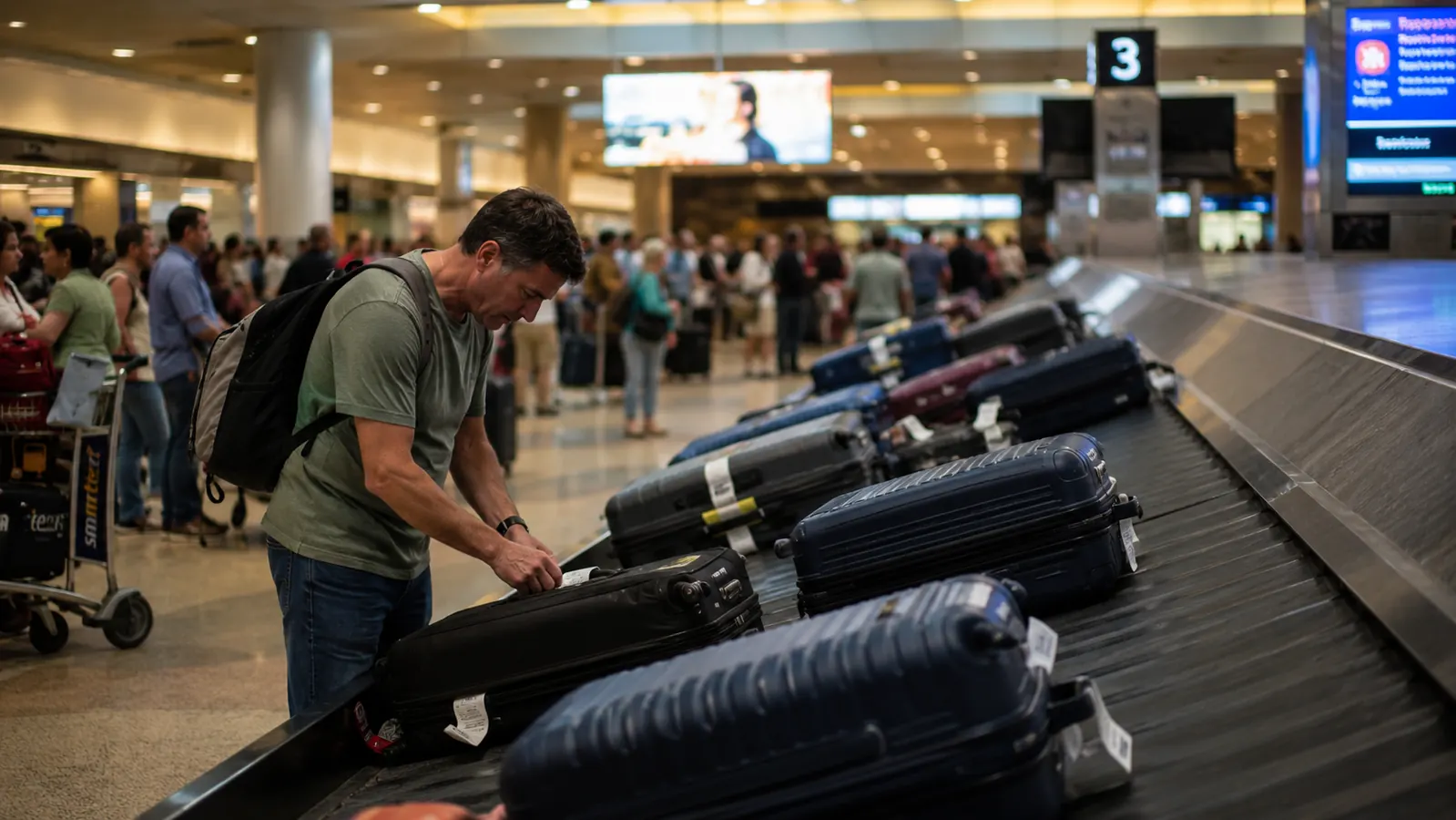
I have stood at baggage carousels in Denver, Lisbon, and Bangkok watching the exact same problem play out. A hundred people, ninety black rolling suitcases, and everybody leaning in at the same angle trying to read a tag that isn't theirs. I used to be one of them, standing there squinting at strangers' name tags at midnight, convinced my bag had been lost. Then I built a five-step system that gets me from carousel to exit in under two minutes, and I have not grabbed the wrong bag, or lost track of my own, since. This guide walks through exactly what I do, starting with the 3-pack of privacy luggage tags I clip on before every trip and ending with the habits that make the tag actually earn its keep.
None of this requires spending a lot of money or carrying anything bulky. It is mostly about doing five small things in the right order, consistently, so your bag is never the one you're squinting at from fifteen feet away while everyone behind you shuffles forward with their bags already in hand.
Start with a tag that actually stays on
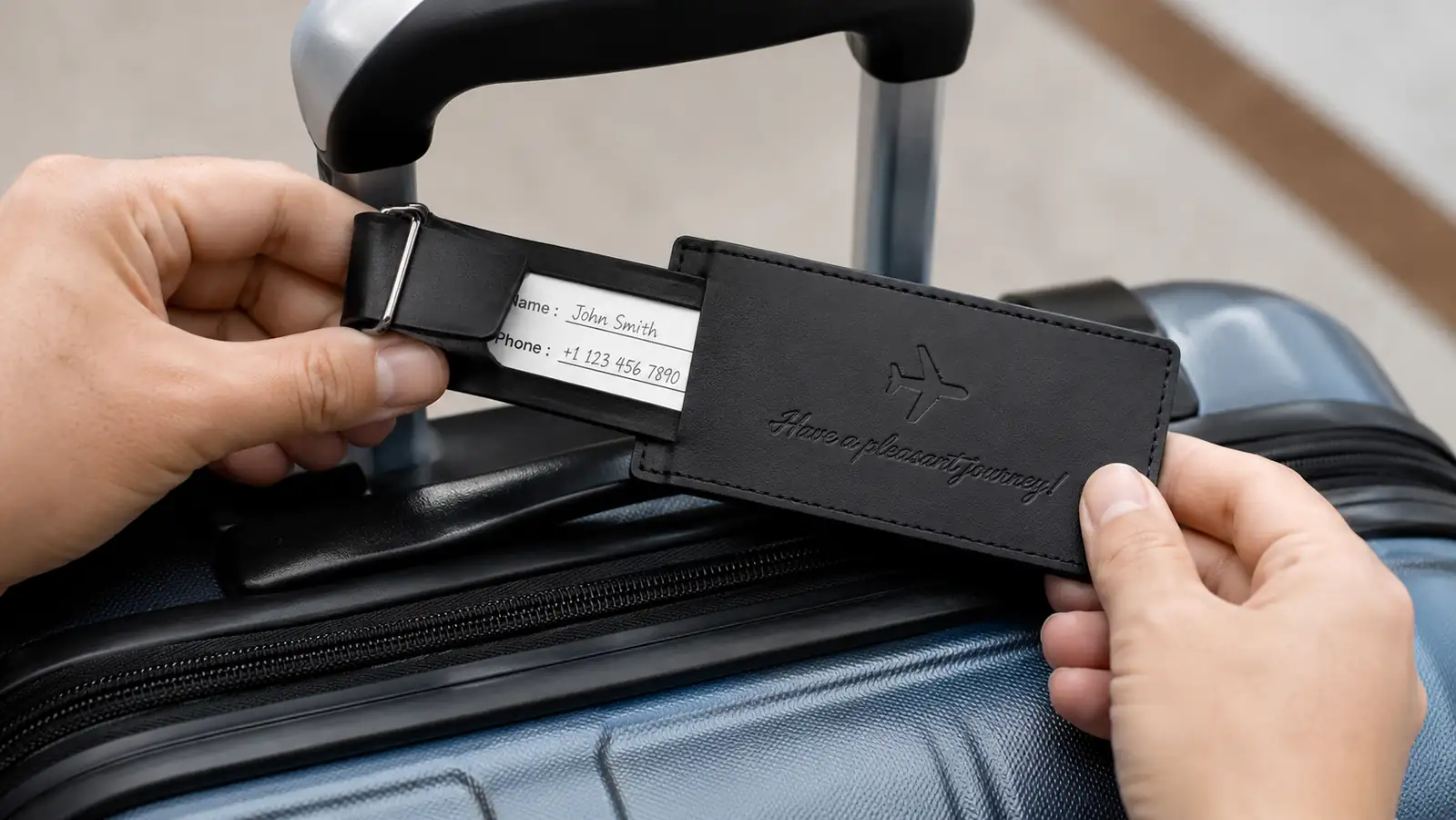
Before you do anything else on this list, get a set of privacy luggage tags that clip on securely and hide your info behind a flap. I use this 3-pack on every suitcase, backpack, and duffel I check.
Amazon Check Today's Price on Amazon →Step 1: Put a tag on every bag, not just your main suitcase
This sounds obvious until you actually watch how most people pack. They tag the big checked suitcase and leave the duffel bag, the backpack, or the second checked bag bare. I learned this the hard way on a trip to Austin when my wife's duffel came down the belt with zero identifying marks and got picked up by someone with an identical black North Face bag. We didn't notice until we were in the rental car, twenty minutes into the drive to the hotel, digging for a phone charger that wasn't there.
Now every bag that goes into the belly of the plane gets a tag, full stop. I bought a 3-pack specifically so I'd have enough for my rolling suitcase, my wife's suitcase, and whatever duffel or backpack we check on a given trip. It's an inexpensive habit that removes an entire category of airport stress, and it takes maybe thirty seconds per bag to clip one on before you leave the house.
The tags I use have a privacy flap that folds down over your name, phone number, and email, so the info is protected from casual view but still there for baggage handlers or a good Samaritan if the bag gets separated from you. That privacy flap matters more than people think. A tag with your info flapping in the open is basically an invitation for someone to note your travel dates while your house sits empty, or worse, to jot down your home address off a paper tag while you're not looking. The fold-over design solves that without making the tag any less useful when it actually needs to be read.
I also make a point of tagging the outside pocket of my carry-on, even though it never leaves my side. Gate-checked carry-ons happen more than people expect, especially on smaller regional jets, and a bag that was never supposed to touch the belly of the plane suddenly needs the same identification as a fully checked one. Better to have the tag already on there than to be scrambling at the jet bridge.
Step 2: Pick a tag color that doesn't blend into your suitcase
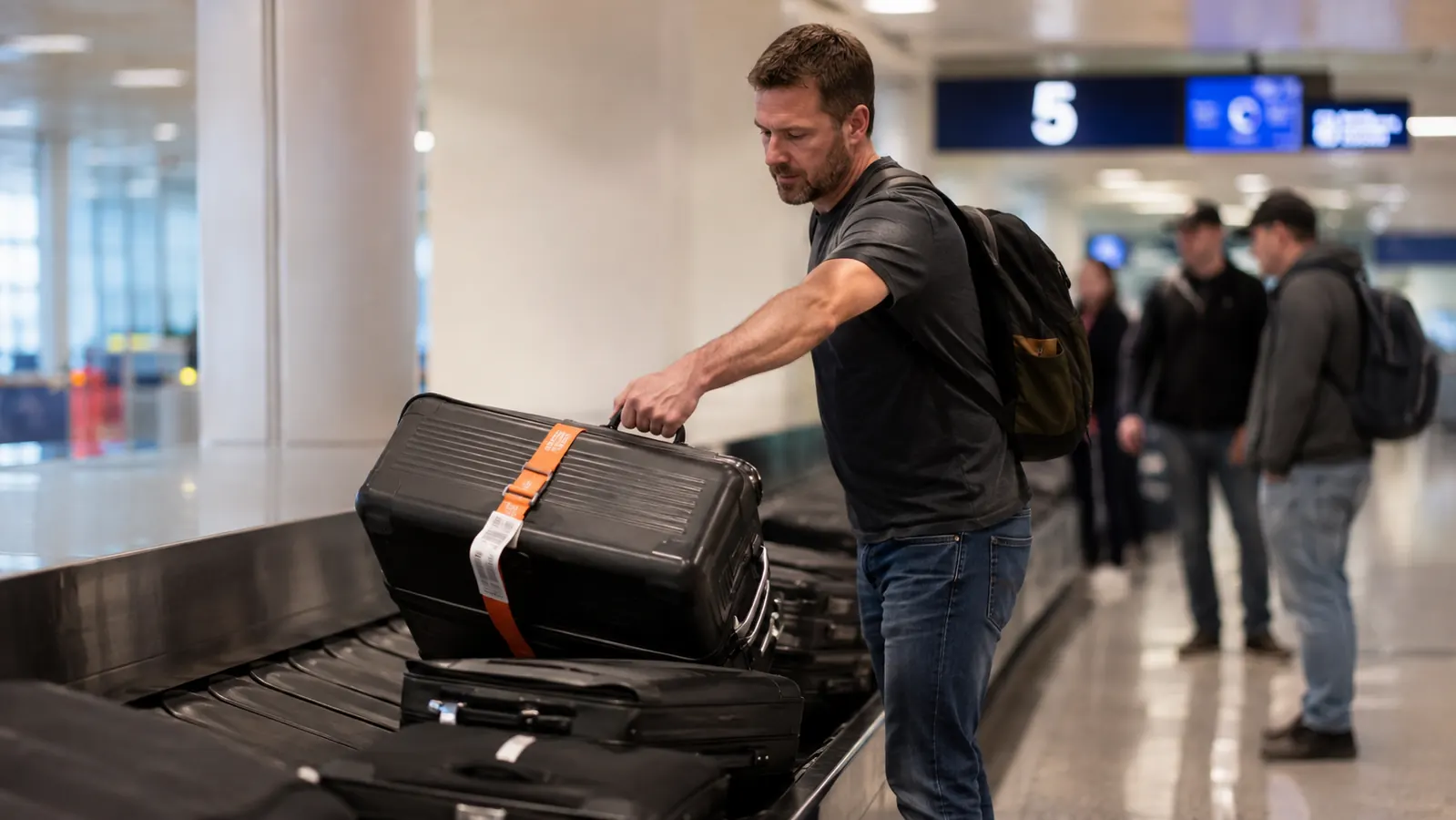
Here's a detail almost nobody thinks about. If your suitcase is black and your tag is also black, you've made your identifying marker just as invisible as the identical bag next to it. I switched to a bright color combination on purpose, an orange and gray set, so the tag itself becomes a visual flag from across the carousel, not just something you read once you're already standing over the bag.
This matters more at a busy international arrivals belt than anywhere else. On my last trip through Miami, I could pick my suitcase out of a lineup of maybe thirty nearly identical black hardshells because the strip of orange on the handle caught my eye before I even had to read anything. Color is the first filter. The written info on the tag is your backup confirmation once you've already grabbed the right one, not the thing you rely on to find it in the first place.
If your suitcase itself happens to be a bright color already, say a red or a teal hardshell, you can actually go the opposite direction and pick a tag that contrasts hard against it, like a bold white or yellow. The goal is contrast against your specific bag, not a universal best color. Look at your suitcase, then pick a tag that would stand out against it from twenty feet away in bad lighting, because that's exactly the condition you'll be judging it under at 11pm after a delayed flight.
Step 3: Add one more visual marker beyond the tag
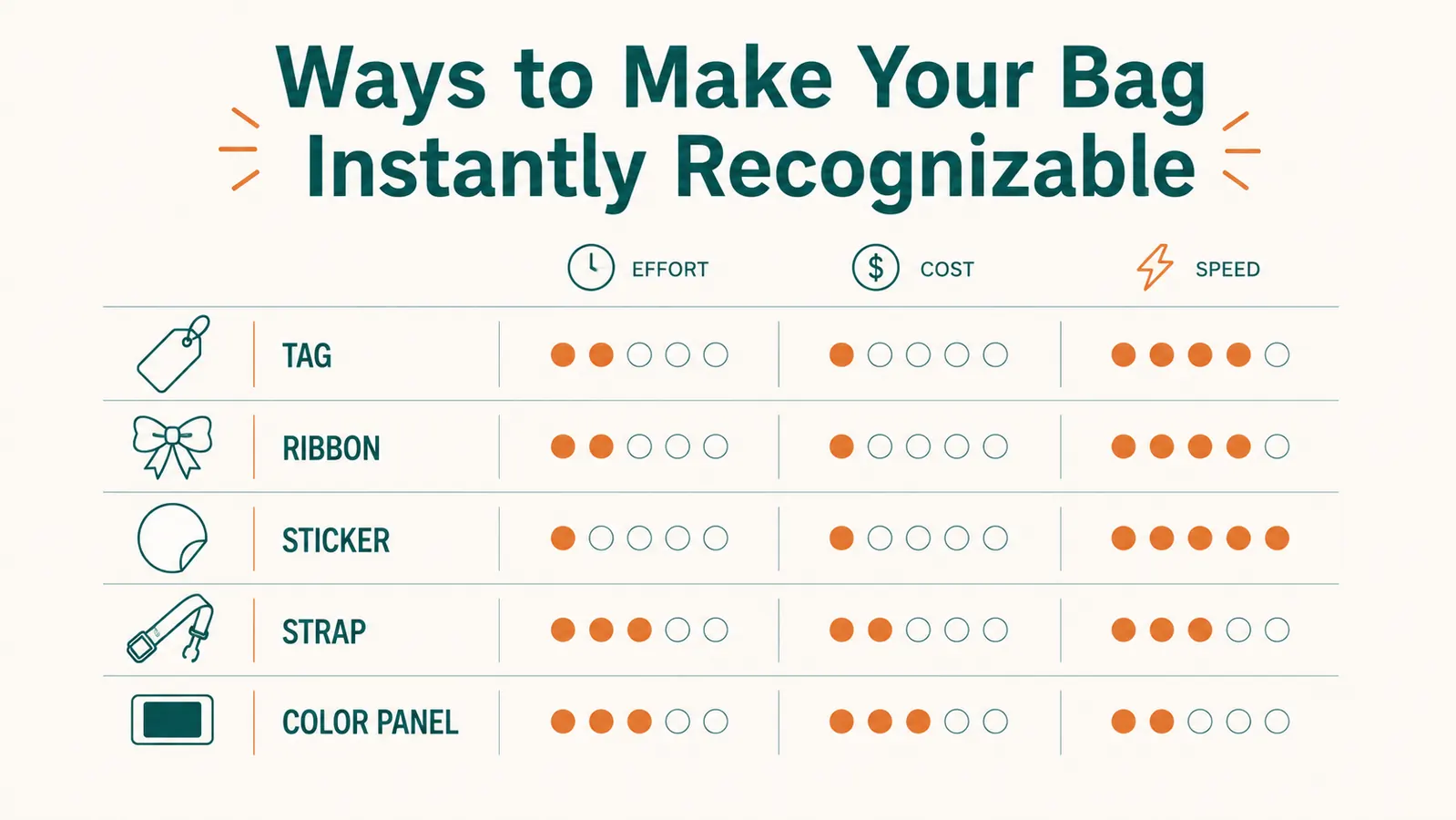
A tag alone is good. A tag plus a second visual cue is what actually gets you off the carousel fast. I loop a bright ribbon through the top handle of my suitcase, the kind you'd find in a gift-wrap aisle for about two dollars. Some people use a strip of colored tape across the top, a sticker, or a paracord bracelet knotted onto the handle. It doesn't matter which one you pick as long as it's something you can spot in your peripheral vision while a hundred bags are circling.
My sister uses a scarf tied around the handle of her suitcase. It works the same way a tag does, it just adds redundancy. If the tag gets snagged and torn off somewhere in transit, which does happen more than you'd think given how rough baggage handling can be, you still have the ribbon or the scarf as your visual anchor. I've seen a tag clip actually shear off completely on a connecting flight through a hub airport, and the only reason I still spotted my bag instantly was the ribbon still tied to the handle.
I'd stop at two markers though. I've seen people go overboard with stickers, straps, and ribbons until the bag looks like a parade float, and honestly it stops being useful once you're carrying five different identifiers, because now you're pattern-matching a cluttered mess instead of one clean signal. Pick one tag and one secondary marker and be done with it. Simplicity is what makes the system fast under pressure.
Step 4: Take a photo of your bag and tag before you check it
I do this every single time now, at the counter or right before I hand the bag to the gate agent for a gate check. One photo, showing the full bag, the tag, and any strap or ribbon. It takes four seconds and it has saved me twice, once when a bag genuinely got mishandled in Charlotte and once when I panicked at 1am in a foreign airport and needed to describe my suitcase to a lost-baggage desk that didn't speak much English. Being able to hand someone your phone with a clear photo cuts the whole process down from a confused back-and-forth about brand names and colors to about ninety seconds, because they can just look at the picture and match it against what's in the system.
This step costs you nothing and takes less time than tying your shoe, so there's really no excuse to skip it. I keep these photos in a dedicated album on my phone so they're easy to find under pressure instead of buried in six hundred vacation pictures from three different trips. I also snap a quick photo of the baggage claim ticket the counter agent staples to your boarding pass, since that number is what actually gets typed into the airline's tracking system if things go sideways.
Step 5: Position yourself at the carousel to see the bags coming, not just the ones already circling
This is a small habit that makes a bigger difference than you'd expect. Most people crowd right up against the belt and stare down at whatever is directly in front of them. I stand back about six feet and slightly to the side, near where bags first drop onto the belt from the chute. From that spot you can see a bag coming for a good ten or fifteen feet before it reaches the crowd, which gives you time to spot your color marker and tag while there's still room to step forward and grab it cleanly, instead of lunging into a scrum of elbows and rolling suitcases.
It also means you're not standing shoulder to shoulder with forty other tired travelers all staring at the same six feet of moving belt. Less crowding, better sightline, faster grab. On a long-haul arrival where everyone's exhausted and short-tempered, that extra six feet of breathing room is worth more than it sounds.
One more small thing that helps here: watch the direction the belt is loading from, which is usually marked near the chute opening, and position yourself accordingly rather than picking a random spot. Bags from the same flight tend to cluster together in batches as they get unloaded from the same cart, so once you see one bag from your flight, whether it's someone else's, you know yours is likely close behind in that same cluster.
What Else Helps
A couple smaller things round this out. If you check bags for the whole family, use the same tag color and the same secondary marker across every bag so you're pattern-matching one visual signature instead of memorizing four different setups. It sounds like a minor detail but it genuinely reduces decision fatigue when you're tired and just want to get to the hotel. And if you fly the same airline often, most of them now offer bag tracking through their app once you scan your claim ticket. It's not a replacement for a good tag and a visual marker, but it's a free extra layer that tells you when your bag has actually been loaded, which cuts down on the anxious carousel-watching before bags even start coming out.
It's also worth doing a quick tag check every few trips instead of assuming last year's tag is still legible. Ink fades, plastic flaps crack in cold cargo holds, and phone numbers change. I do a five-minute tag audit before any trip longer than a week, just flipping the privacy flap on each bag to confirm the info printed underneath is still current and readable.
Your bag doesn't need to look expensive. It needs to look like nobody else's.
Make your bag the easy one to spot
A 3-pack of privacy luggage tags costs less than an airport meal and takes the guesswork out of every carousel you'll ever stand at. Grab one for every bag you check.
Amazon Check Today's Price on Amazon →